Aug 19, 2026 at 18:17
EN- 01Khlong Toei District, Bangkok · 11:18
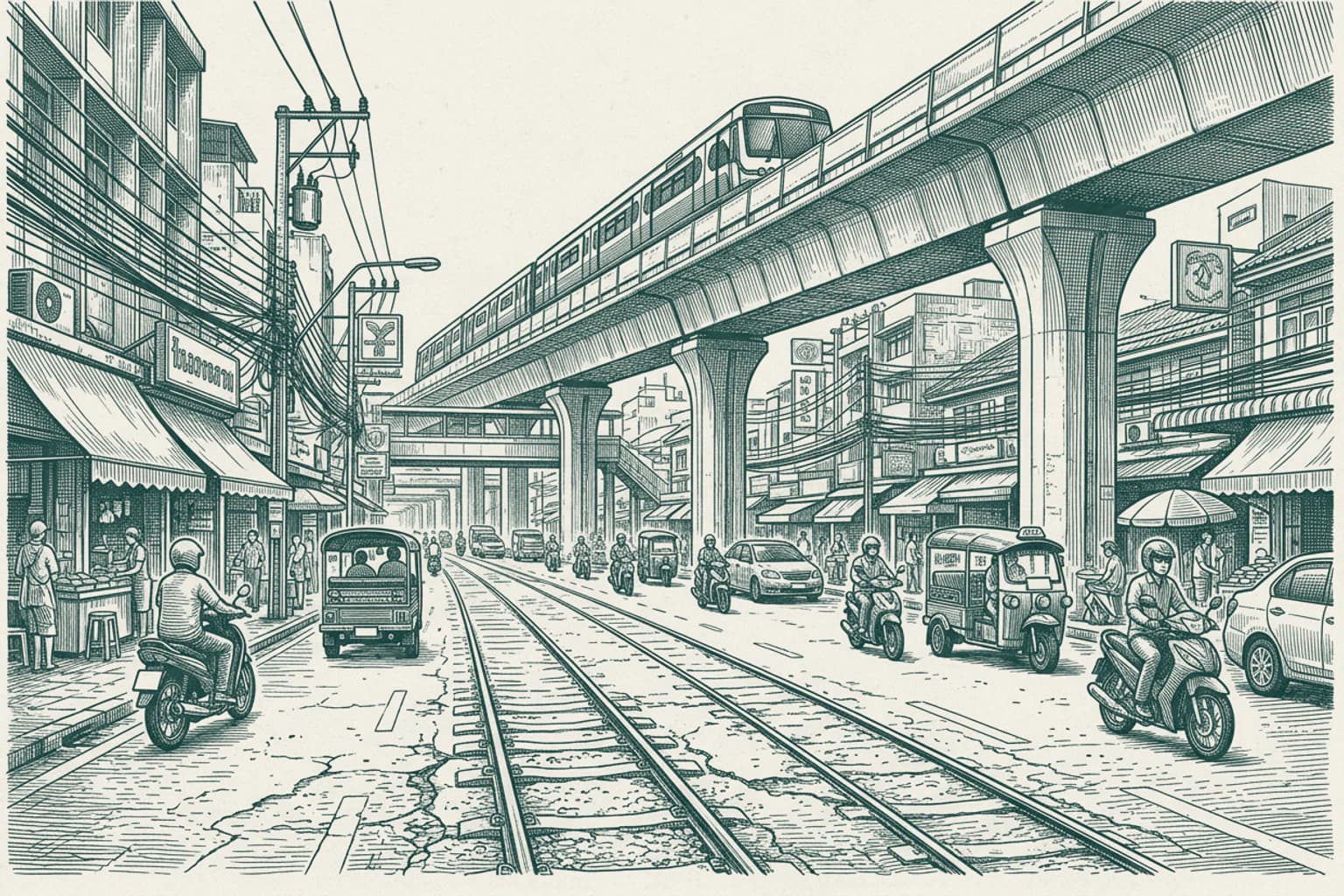
Khlong Toei District, Bangkok Historical path of the Paknam Railway
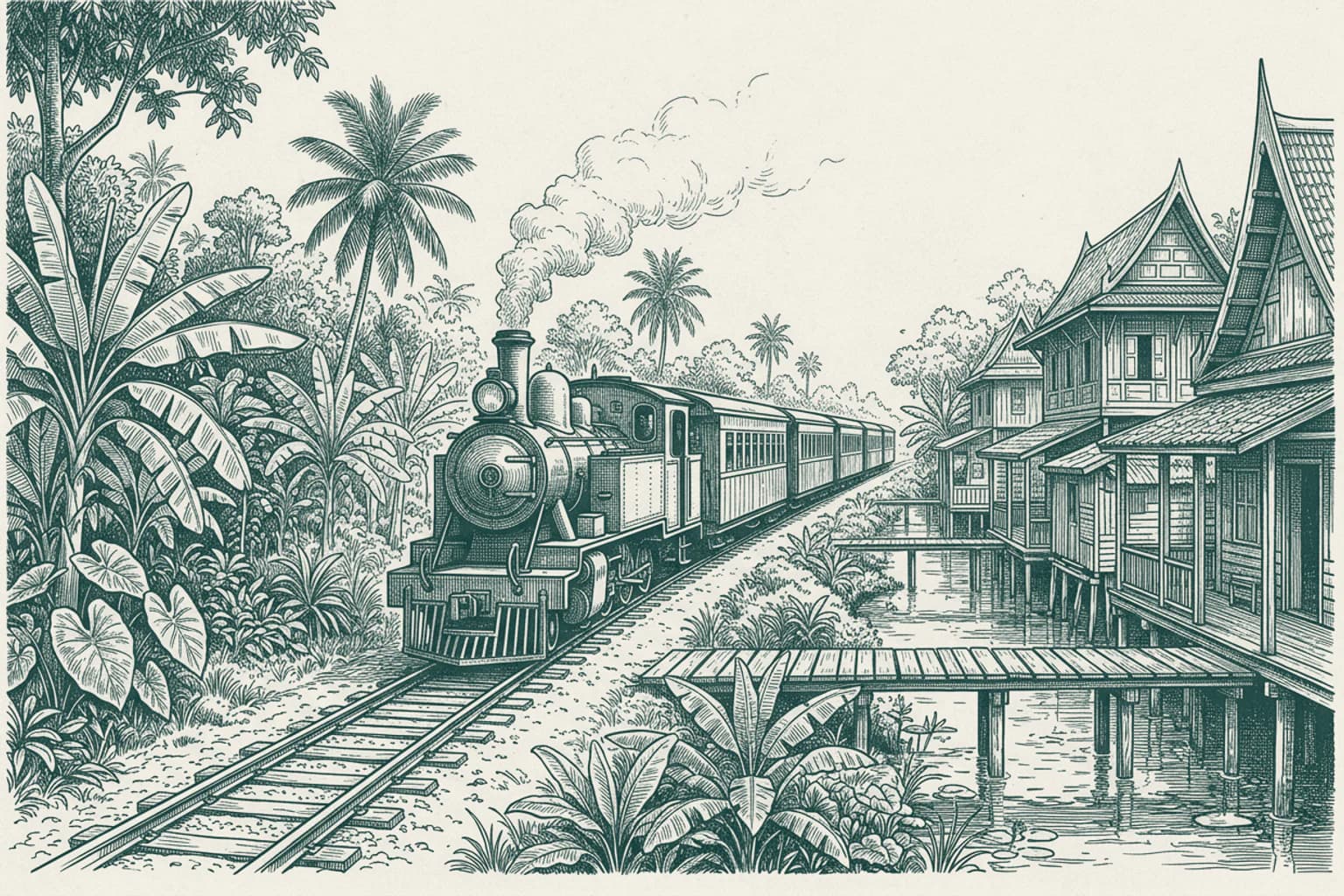
It is good to see you back on this familiar stretch of Sukhumvit Road. While the modern bustle of the Skytrain often steals the spotlight, the ground beneath us holds a very different history. Before the concrete towers rose, this area was defined by the Paknam Railway, which operated its tracks right through here from 1893 until 1960. This line was the very first railway in Thailand, connecting the capital to the coastal town of Samut Prakan. If you look closely at the path the road takes today, you are essentially tracing the ghost of that old iron route. It is quite a contrast to imagine the steam engines chugging through what is now one of the most vibrant and trendy districts in the city.
- 0211:24
The Shared Currents of Bangkok
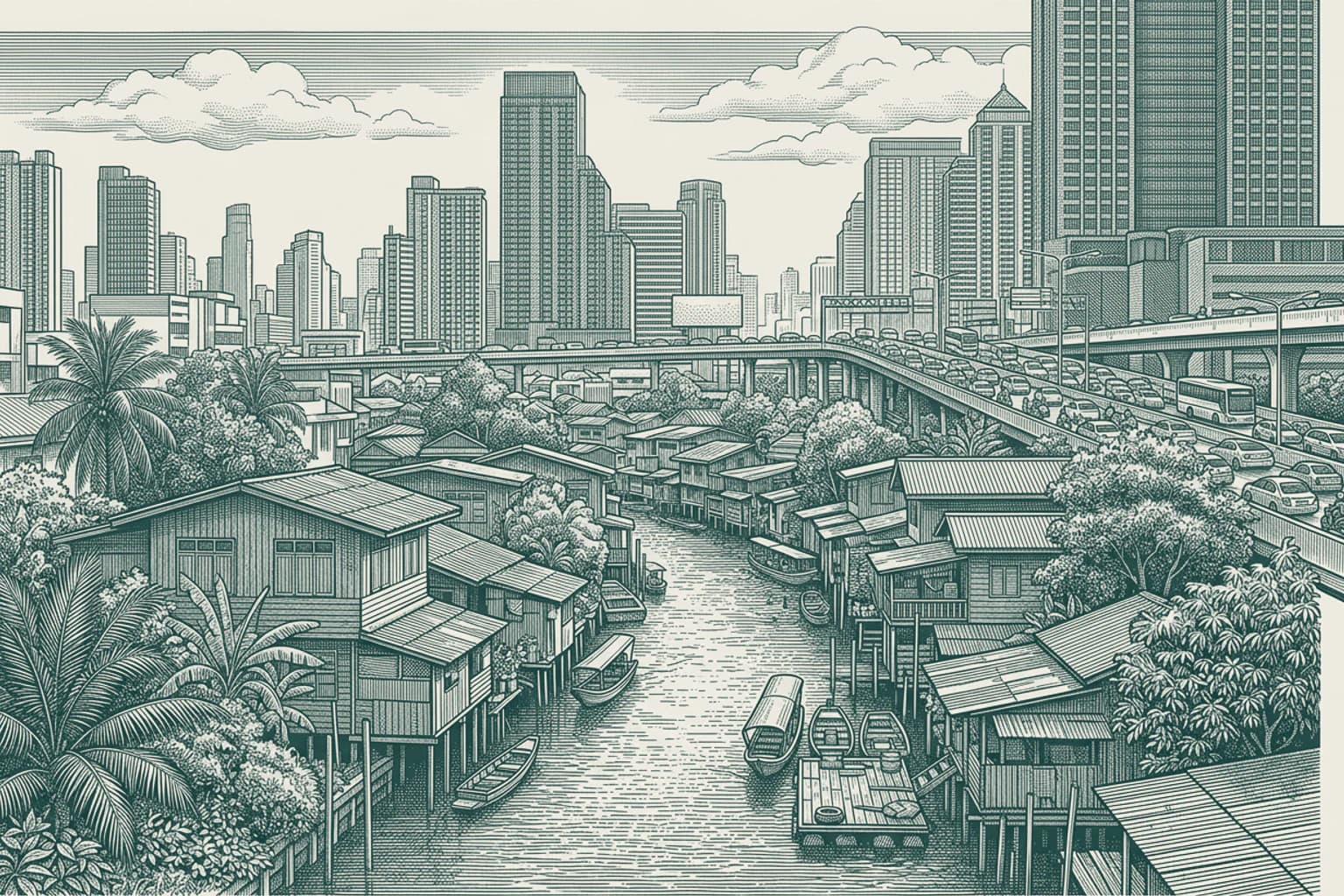
We travel through the heart of modern Bangkok, moving between the vibrant districts of Khlong Toei and Vadhana. These two areas, while distinct in their current character, are woven into the same historical fabric, primarily through the lifeblood of the Phra Khanong area. This neighborhood serves as the bridge between them, as it is administratively divided between the Phra Khanong Subdistrict of Khlong Toei and the Phra Khanong Nuea Subdistrict within Vadhana. The story of this connection begins with water. Between 1837 and 1840, the excavation of the Khlong Phra Khanong canal transformed the landscape. As the waterway cut through the earth, rural communities gravitated toward its banks, establishing roots that would eventually flourish into the dense urban sprawl we see today. This ancient canal is deeply embedded in local lore, serving as the setting for the legendary ghost story of Mae Nak Phra Khanong, a tale that has echoed through these districts for generations. While the canal provided the initial artery for growth, the evolution of the area continued through the twentieth century as the region shifted from a suburban, quasi-rural landscape to a hub of development. In Vadhana, the neighborhood of Thong Lo stands as a testament to this political and social transformation. Its name, meaning molten gold, honors Thonglo Khamhiran, a naval officer and member of the 1932 People Party. Before the Second World War, much of this land along Sukhumvit Road was occupied by the navy, maintaining a quiet, strategic presence in what was then the outskirts of the capital. Meanwhile, the geography of the surrounding area was defined by the intersection of major transit routes. The Phra Khanong Junction, where Rama IV Road meets Sukhumvit Road, became the anchor for both districts, serving as a crossroads that dictated the flow of people and history. Today, the connection between Khlong Toei and Vadhana is felt through these shared landmarks and the legacy of the canal that first brought life to the region. From the historical depths of the Phra Khanong settlement to the modern evolution of districts that once served as naval territory, these areas remain inextricably linked by the very geography they occupy. They share the same soil and the same history, unfolding as one continuous journey along the changing face of Bangkok.
- 0311:24
The Roots of Vadhana District
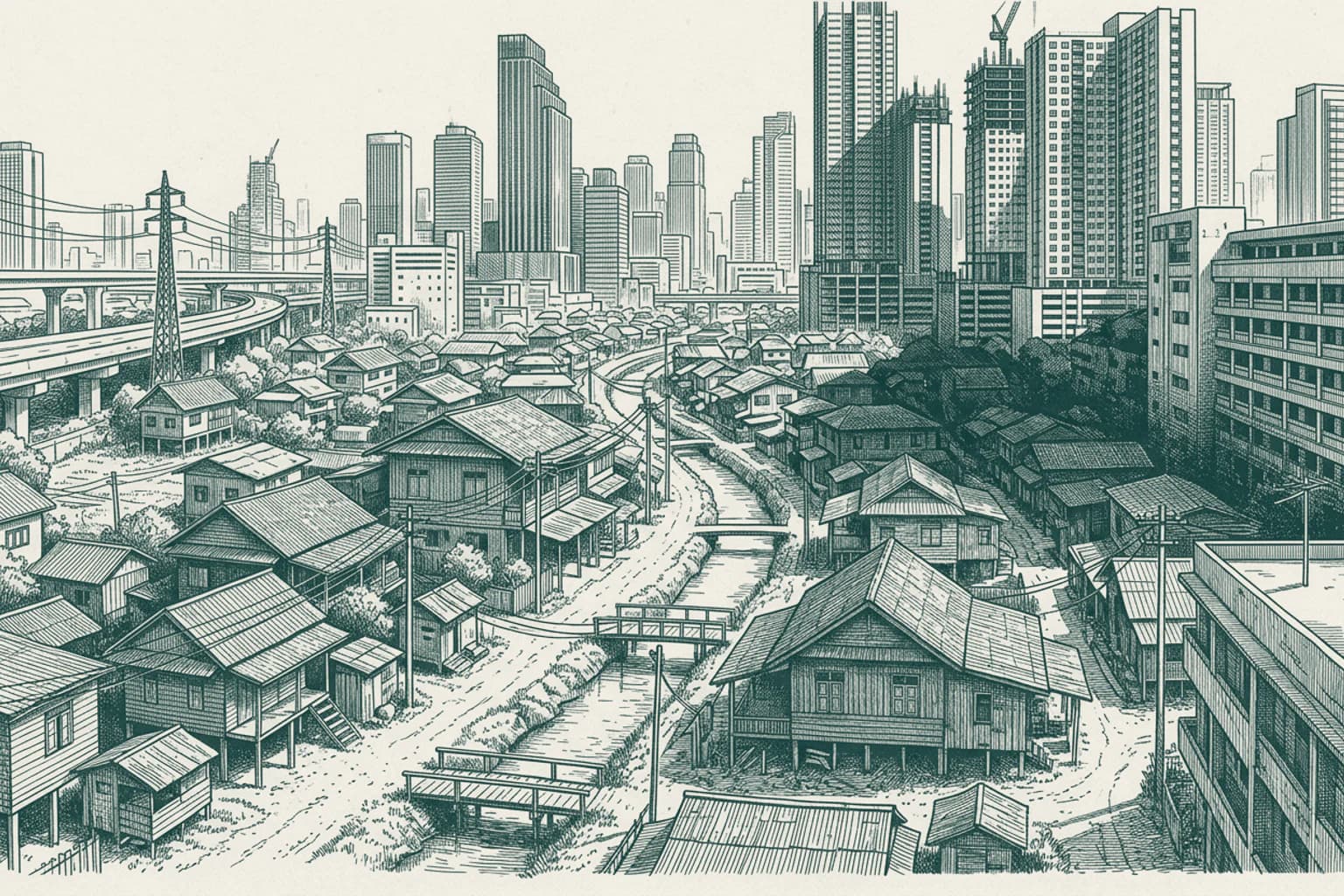
The road ahead stretches through the heart of Bangkok, pulling you deeper into the Watthana District. Before the skyscrapers and the modern pulse of the city took hold, this land was a quiet expanse of quasi-rural life, a suburban fringe where the navy held sway over the horizon. The name of the neighborhood you are entering, Thong Lo, carries an echo of a specific moment in Thai history. It takes its name from Thonglo Khamhiran, a naval officer and a member of the Khana Ratsadon, the revolutionary group that reshaped the nation in 1932. He was a man of the soil in this district, owning land and houses where others saw only the outskirts of the capital. In those days, long before the skytrain tracks cast their shadows over Sukhumvit, the area was defined by the presence of the military and the slow rhythm of the suburban landscape. The stakes for this region were set not by commerce or tourism, but by the shifting tides of political change and the physical expansion of a growing city. As you travel closer to the center of Watthana, you are moving through a space that once served as a quiet anchor for the men who participated in the 1932 revolution. The transition from a quiet naval outpost to a central hub was not an accident, but a slow, decades-long evolution. The land that once belonged to a single revolutionary officer eventually became the backbone of a district that would define the modern face of Bangkok. The story of this place is a layering of eras, where the memory of pre-World War II suburban life still lingers beneath the asphalt and steel. You are crossing the path where rural communities once stood, looking out toward the horizon that would soon be transformed by rapid urbanization. The history here is quiet, etched into the very street names and the geography of the district. It is a narrative of how a small, strategic piece of land held by a single individual grew to become the vibrant, complex urban core that you are currently approaching.
- 0411:24
The Transformation of Vadhana District
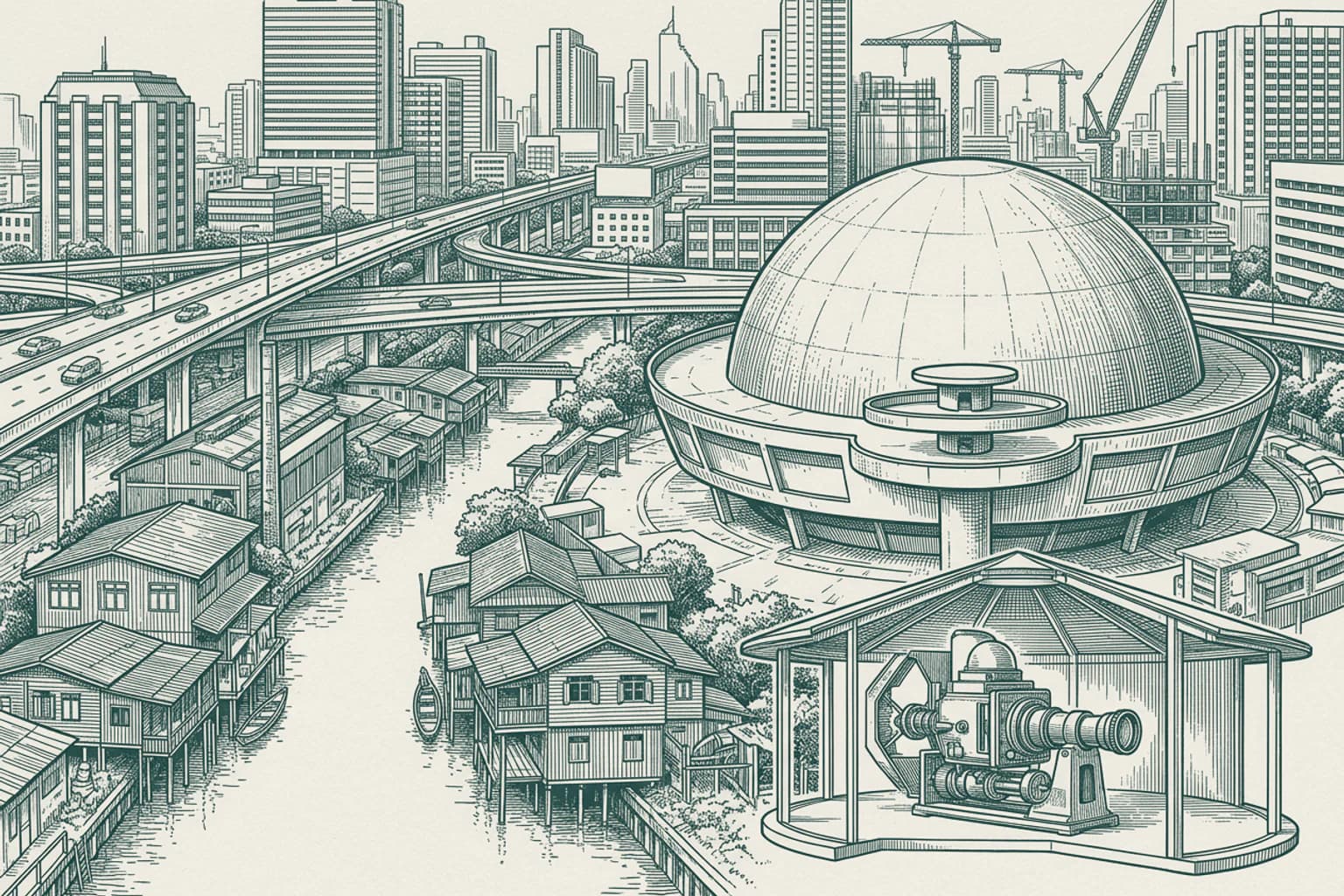
So, where were we in this unfolding narrative of transformation. We left the landscape in the shadow of historical upheaval, but the true metamorphosis of Vadhana was yet to arrive. By the mid-twentieth century, the area began to shed its quasi-rural skin. The land that had once been quiet, occupied largely by naval interests and vast, open stretches, found itself at the center of a new national ambition. It is essential to look at the name Thong Lo, or Sukhumvit Soi 55, as a marker of this shift. Named after Thonglo Khamhiran, a naval officer and key member of the 1932 revolutionary group, this stretch of road serves as a literal bridge between the old guard and the modern era. Where car dealerships and suburban homes once claimed the space, the geography began to tighten and accelerate. The presence of the navy, which had long defined the character of the soil, slowly receded to make room for the infrastructure of an emerging metropolis. This was not merely a change in architecture, but a fundamental shift in the identity of the district. The construction of the Bangkok Planetarium, which began in 1962 with a budget of twelve million baht, stands as a testament to this period. When it opened its doors in 1964, utilizing the advanced Mark IV Zeiss projector, it signaled that Vadhana was no longer a peripheral zone of canals and rural settlements. It had become a hub for education, science, and the aspirations of a young, modernizing society. The quiet banks of the Khlong Phra Khanong, once known for local legends and slow-moving water, were now flanked by the symbols of a technological future. The district was becoming a mosaic, where the memory of the 1932 revolution and the scars of the 1942 bombing raids were being paved over by the relentless march of urban expansion. The atmosphere thickened with the promise of commerce and international influence, as the area began to attract those who saw the potential in its strategic location along Sukhumvit Road. The transition from the rural silence of the past to the humming, electric pulse of a city in the middle of a growth spurt was nearly complete, and the stage was being set for the massive, glass-fronted structures that would eventually define the skyline. The momentum was building, turning the once-open fields into the dense urban core that you are currently approaching.
- 0511:24
The Legacy of Vadhana District
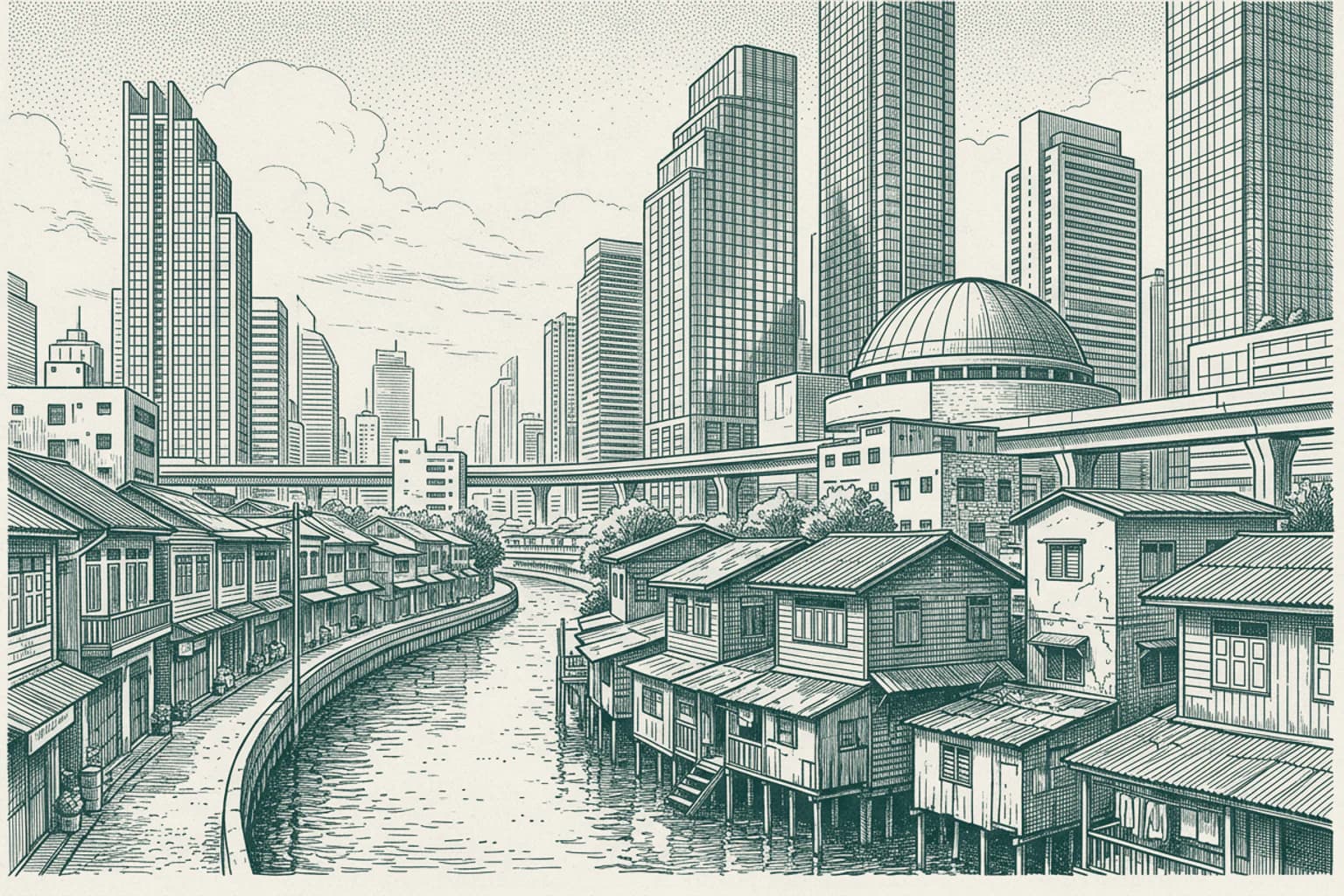
But let us return to our story, moving beyond the echoes of revolution and the dawn of scientific curiosity that once defined these lands. The transformation of this district was not merely a matter of concrete and steel, but a layering of identities that shifted as rapidly as the city itself. Where once rural communities clustered along the banks of the Phra Khanong Canal, excavated between 1837 and 1840, a new, cosmopolitan rhythm emerged. The area of Thong Lo, named after the naval officer Thonglo Khamhiran—a key figure in the 1932 Khana Ratsadon revolution—stands as a testament to this evolution. The land he once owned, which served as a quasi-rural outpost for the navy before the Second World War, has long since shed its suburban skin. The quietude of those early days was permanently replaced by the pulse of modern Bangkok, turning what was once a landscape defined by naval presence and car dealerships into one of the most vibrant urban centers in the capital. As the city expanded, the district became a canvas for international influence and cultural convergence. Areas like Sukhumvit Soi 22, known for years as Washington Square, became a legendary hub for expatriates, Vietnam War veterans, and writers, embedding their own distinct lore into the local fabric. This was a place where mystery novels were born and where different worlds met over shared tables, marking a stark contrast to the district's humble origins. The skyline began to reflect this ambition, with massive structures and sprawling retail districts like the EM District taking root on the very soil where traditions once held sway. The opening of the Bangkok Planetarium in 1964 had already signaled the shift toward a future-oriented society, and today, that trajectory has solidified into a dense, interconnected urban core. The ghosts of the past, whether they are the legendary figures of Phra Khanong folklore or the veterans of the mid-century era, remain woven into the streets you are currently traversing. The district stands now as a testament to the relentless pace of change, a place where every intersection holds a memory of a different era. You are watching the culmination of these decades of growth, a seamless blend of historical significance and modern energy, and it is precisely there that you are heading now.
- 06Khlong Toei District, Bangkok · 11:28
Khlong Toei District, Bangkok Район Кхлонг Тоэй и Эккамай
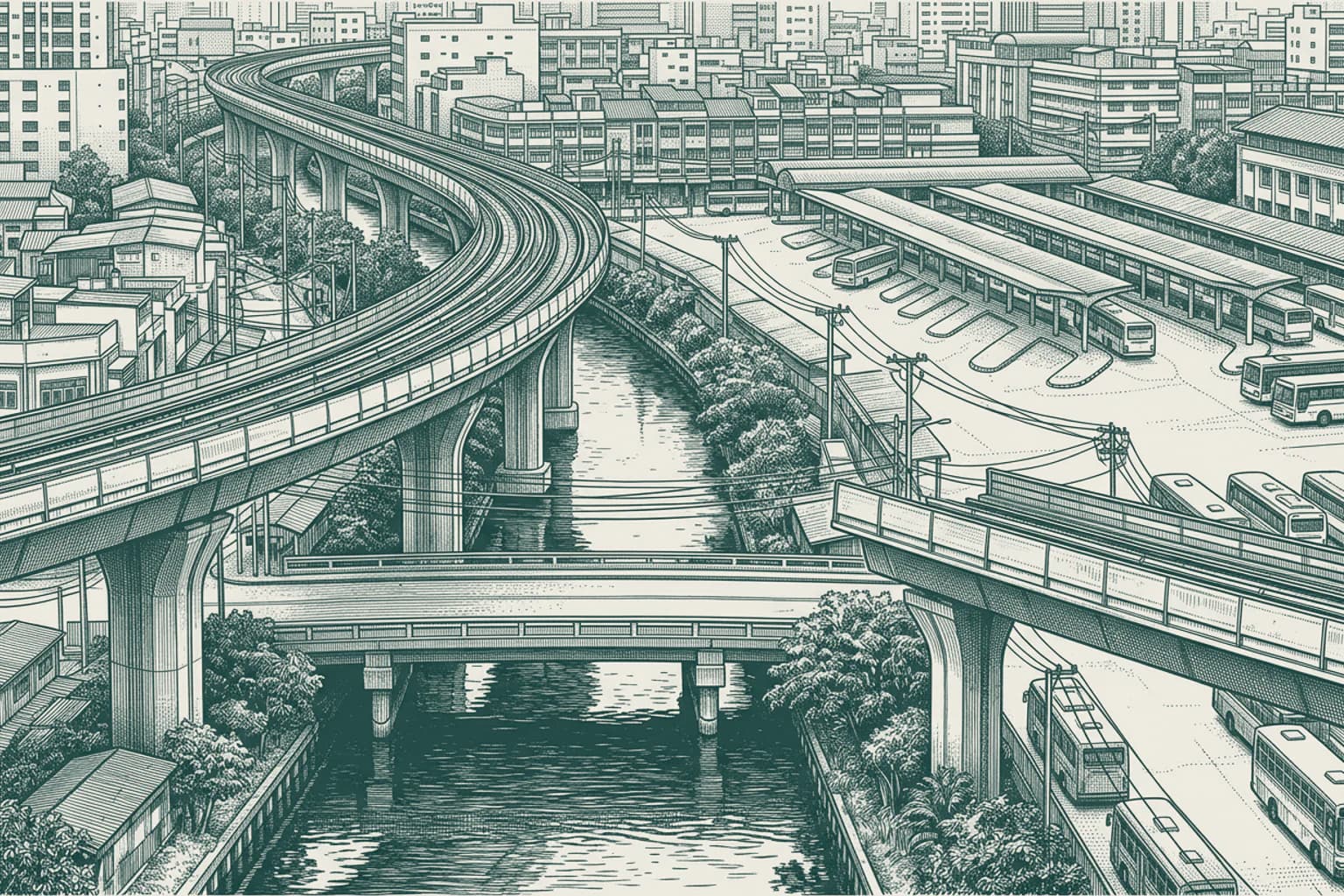
Мы сейчас находимся в районе Кхлонг Тоэй, который плотно переплетен с историей современной транспортной артерии Бангкока. Прямо рядом с нами начинается улица Эккамай, официально известная как Сой Сукхумвит 63. Это место служит важным связующим звеном, соединяющим крупные магистрали города и пересекающим канал Сэнсэп в своей северной части. Эта зона известна как крупный транспортный узел благодаря соседству с восточным автобусным терминалом. Местные жители и путешественники часто называют этот район просто Эккамай, и это название стало самостоятельным брендом для всей окружающей территории. Здесь же расположена станция наземного метро, которая с конца девяностых годов прошлого века радикально изменила ритм жизни этого квартала, превратив его из спокойной окраины в оживленный центр притяжения.
- 0711:29
The Ghost and the Canal
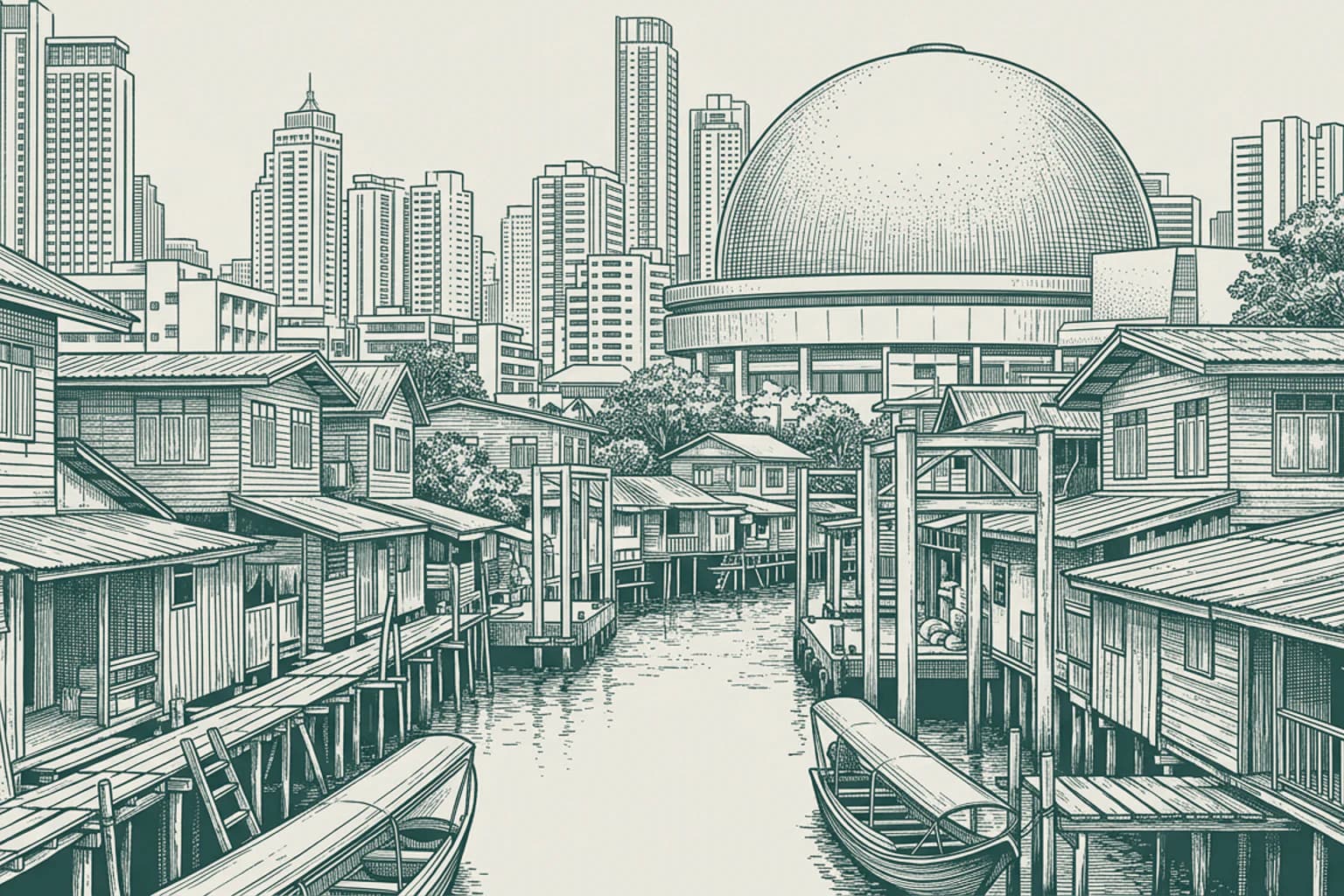
As you pull away from the busy streets of Khlong Toei, the landscape begins to shift from the frantic pulse of the modern city into the layered history of old Bangkok. You are driving through an area that once defined the very edges of the capital, where the city met the quiet, agrarian rhythms of the water. Long before the concrete towers rose, this land belonged to the Phra Khanong Canal. Excavated between 1837 and 1840, the canal served as the lifeblood for rural communities that settled along its muddy banks. It is here, in the damp air and among the shadows of the old waterway, that the most enduring legend of the region was born. The locals still whisper the name of Mae Nak Phra Khanong, a ghost story so deeply woven into the fabric of this district that it transcends time. It is a story of undying loyalty and the thin veil between the living and the departed, rooted firmly in the history of these specific canal banks. While the world around you now moves at the speed of modern traffic, the spirit of Phra Khanong remains a silent anchor, reminding everyone who passes through that this ground has held secrets for nearly two centuries. The canal itself was the original artery of the area, transforming a quiet, suburban expanse into a place of profound human connection. As you move further along the road, the transition is stark. You pass by the site of the Bangkok Planetarium, which has stood as a beacon of education since 1964. It is a place designed to look outward at the stars, a sharp contrast to the introspective, earthly legends of the canal. The planetarium, with its massive dome, marks the moment when the district began to look toward a scientific future, leaving the quiet rural days behind. The road ahead carries the weight of these contradictions, from the ancient canal myths to the modern pursuit of knowledge. Every mile you put behind you is a journey from the deep, mystical past of Bangkok toward the sprawling, illuminated horizon of the present day. The city is a collection of these small, intense histories, each waiting to be recognized by the traveler who takes the time to look beyond the windshield. I hope the road ahead remains clear and your journey is filled with steady progress. It was a pleasure to share this stretch of the way with you. Safe travels as you continue your path forward.