Historical Echoes Near Fuengirola
EN- 01Mijas, Málaga · 18:39
Mijas, Málaga Historical Echoes Near Fuengirola
It is great to see you back on this stretch of road again. While the rolling hills here have a certain familiar charm, the history beneath these quiet slopes is surprisingly intense. Most people just see the modern scenery, but back in 1810, this specific area was the stage for a dramatic clash during the Peninsular War. It is hard to imagine now, but this landscape once echoed with the chaos of the Battle of Fuengirola, a sharp reminder of how this region has been a crossroads for conflict and change long before it became the peaceful spot we know today. It is fascinating how layers of time stack up here, from those old military maneuvers to the quieter academic halls that have since cropped up in the neighborhood. Does it ever strike you how quickly a place can trade its cannons for classrooms? 🏰
- 0218:40
The Road Connecting Mijas and Fuengirola
As you travel through this sun-drenched landscape of the Costa del Sol, the road beneath your wheels is more than just asphalt; it is a ribbon of history that fundamentally altered the destiny of two neighbors. For centuries, Mijas and Fuengirola existed in a state of quiet distance, their fates intertwined by the shifting tides of empires, yet physically separated by the rugged terrain. The history of Mijas is a long tapestry, stretching back to the Tartessians and the mineral-rich hills that drew Phoenicians and Greeks to its slopes. Under Roman rule, it was known as Tamisa, a name the Moors later softened to Mixa. Through the centuries, the village endured the rise and fall of the Emirate of Córdoba, the resilience of the local population against the Catholic Monarchs in 1487, and the constant, chilling threat of pirates that forced the construction of coastal watchtowers—many of which still gaze out over the Mediterranean today. Yet, for all its rich, storied past, Mijas remained a place of isolation for generations. While life in the 19th century revolved around agriculture, paper mills, and the tragic arrival of General Torrijos, who marched through these hills in 1831 toward his final fate, the town remained tucked away in its mountain refuge. The most significant shift in the modern geography of this region occurred in 1873. It was in that year that a road was finally carved out, linking Mijas directly to Fuengirola. This artery did more than just connect two municipalities; it shattered a state of segregation that had been in effect since 1841. Before this road, the two communities lived in different worlds, despite their proximity. The path opened a new chapter, though the village itself would remain largely untouched by modern conveniences for some time, lacking phone services until 1953. Today, as you drive toward the integrated areas of Las Lagunas or pass the established educational history of St. Anthony’s College, you are traveling the very path that bridged the gap between the hillside village and the coast. What was once a journey of isolation has become a seamless passage, turning two distinct historical nuclei into the vibrant, interconnected heart of the Costa del Sol you see today.
- 0318:40
The Ancient Origins of Mijas
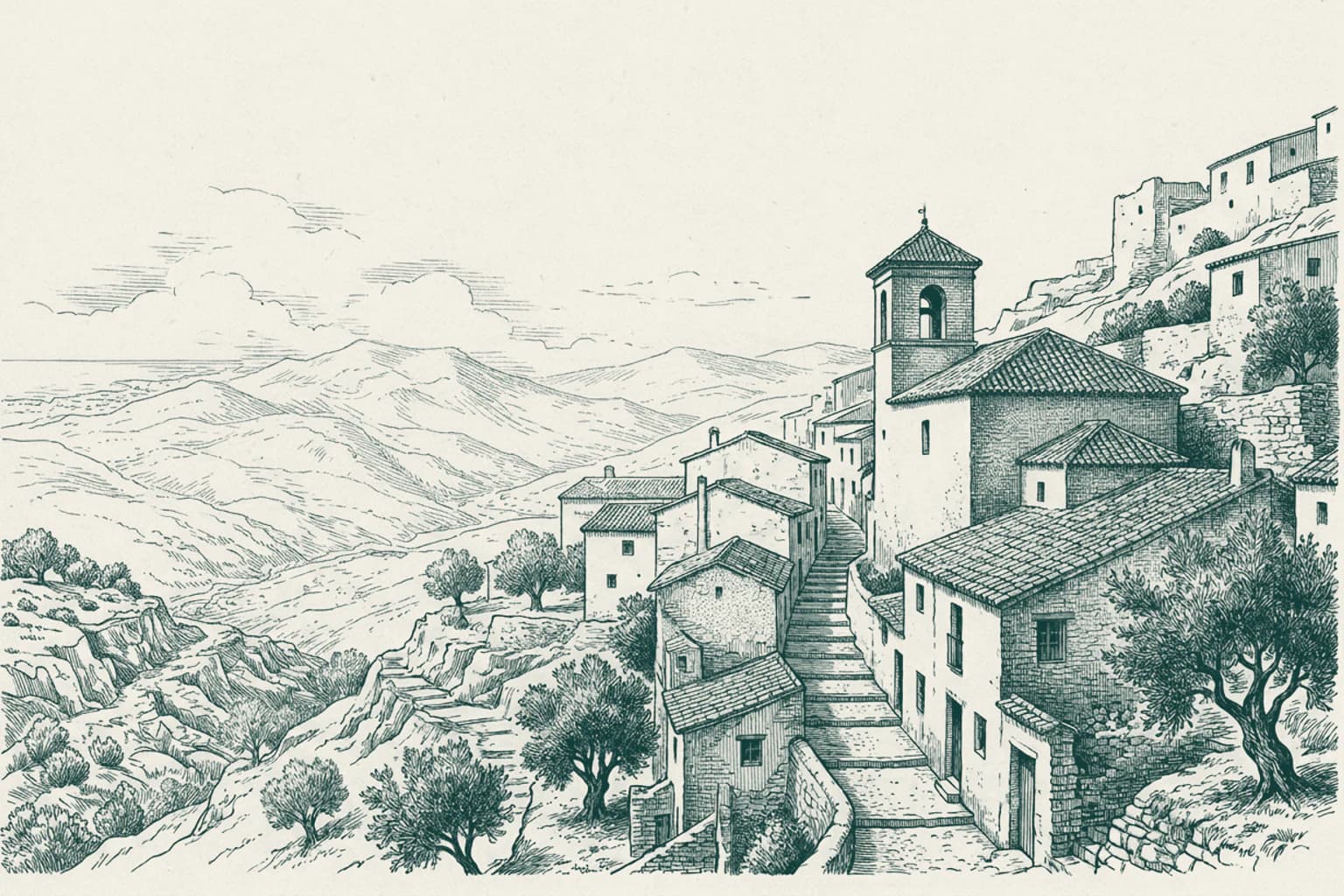
As the road stretches ahead and the landscape remains quiet, consider the weight of the ground beneath your wheels. You are heading toward a place that has been a silent witness to millennia of human ambition, a place where the mountains cradle history in their white-washed stone. Long before the modern coast became a destination, Mijas was already a prize. Founded in prehistoric times by the Tartessians, this site was never just a village; it was a strategic stronghold. Look at the remnants of the original fortification still clinging to the exterior walls of the city—a testament to a time when mineral wealth made this mountainside a beacon for the ancient Greeks and Phoenicians alike. Ptolemy himself recorded the significance of this place in his second-century Geography, marking it as a node of early civilization. When the Romans arrived, they saw the same potential, establishing a vibrant commerce and calling the settlement Tamisa. But the story of Mijas is one of constant transformation. When the Visigoths took control after 714 AD, and later when the Moors swept through, the town didn't merely survive—it evolved. The Moors, with their keen eye for administration, shortened the name from the Roman Tamisa to Mixa, the linguistic root of the Mijas you are approaching today. It was a complex era of negotiation; the inhabitants were permitted to retain their property, religion, and customs, provided they surrendered a third of their agricultural produce. Yet, stability was always fragile. The village became a pawn in the power struggles of the Emirate of Córdoba, falling under the control of the rebel Umar ibn Hafsun before being reclaimed by Abd al-Rahman III in the late 9th century. Through these early centuries, the town was forged in the fires of shifting loyalties and mountain isolation. The stakes were always high: to hold Mijas was to command the passage between the fertile inland and the shimmering, dangerous coast. It was a place defined by its defensive posture, a village that learned early on that to exist was to resist, to endure, and to adapt to whoever claimed the crown of Andalusia. And it is into this layered, ancient reality that your journey is now leading you.
- 0418:40
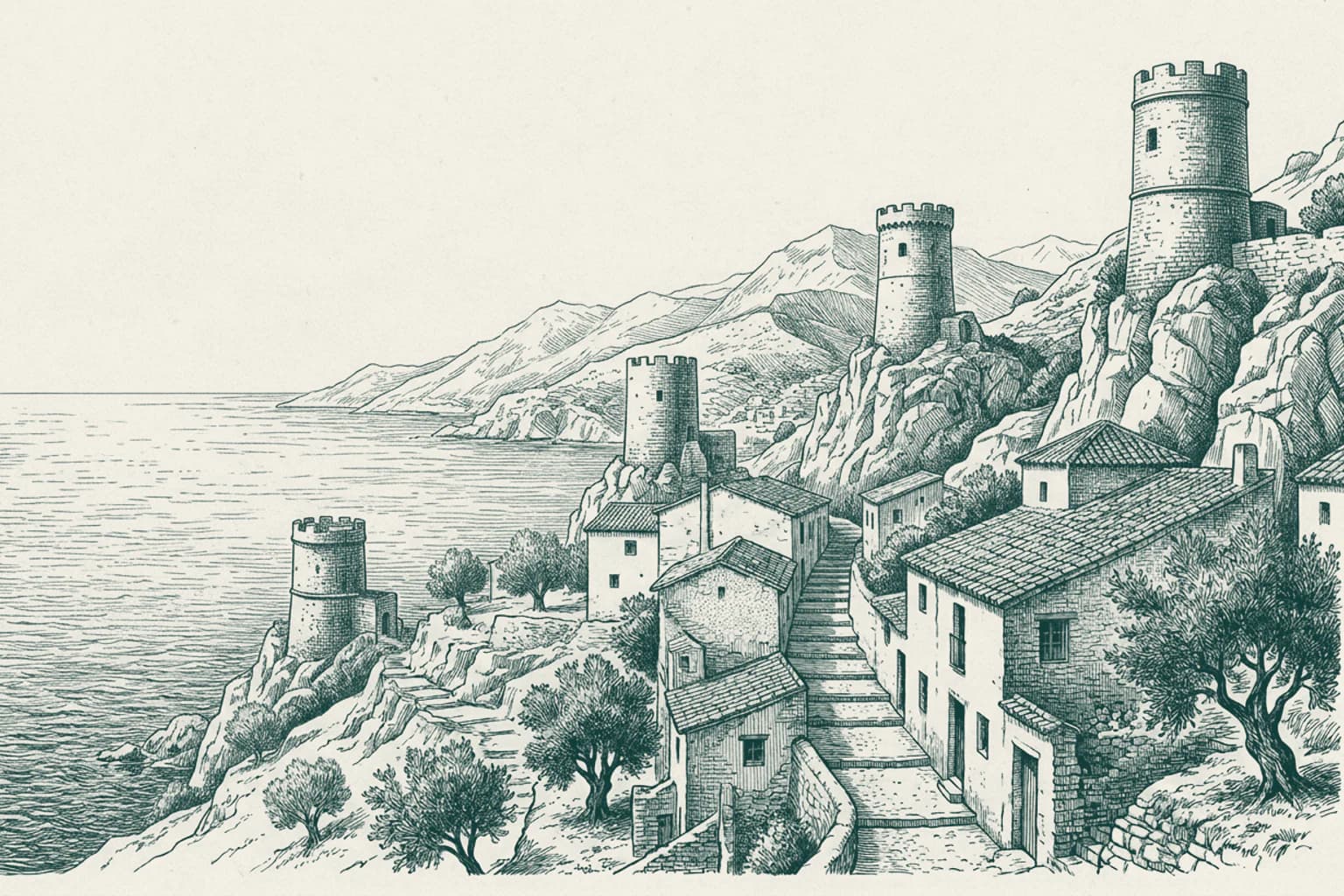
The Siege and the Watchtowers
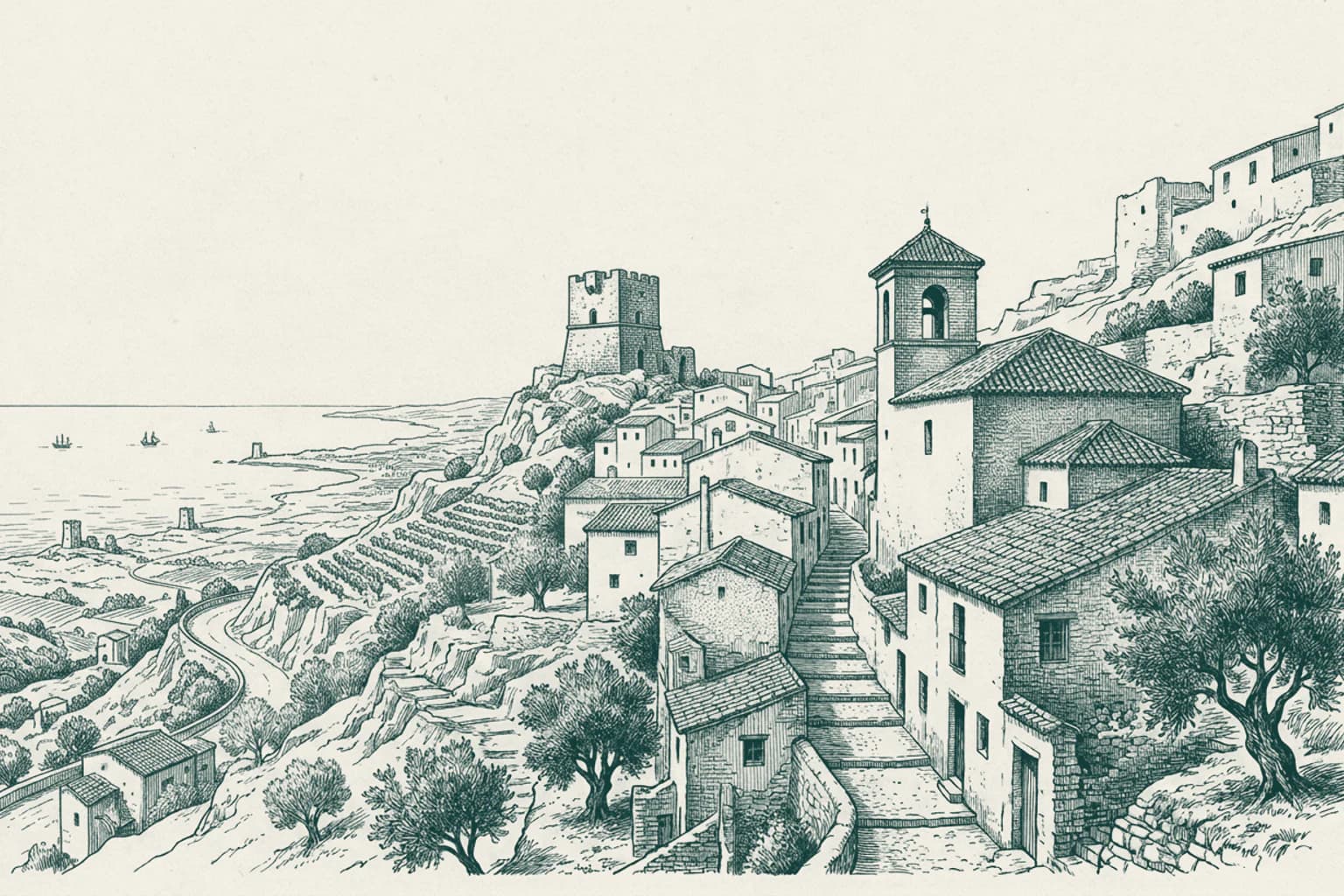
But let us return to the thread of our narrative, where the shifting tides of power began to tighten their grip on the mountainside. By the late 15th century, the destiny of Mijas became inextricably linked to the grand ambitions of the Catholic Monarchs. In 1487, as the siege of Málaga unfolded, the village stood in defiance, a small bastion of resistance against the encroaching crown. When the inevitable surrender finally came, the cost was total: the inhabitants were sold into slavery, and the landscape of the village was irrevocably altered. Yet, the story of survival was far from over. A few decades later, during the Revolt of the Comuneros, the town secured a precarious new identity by remaining loyal to the Spanish crown, earning the title of Muy Leal—the Very Loyal. Joanna of Castile elevated it to the status of a villa, granting it an exemption from royal taxes as a reward for its allegiance. But peace was a luxury the coast could not afford. Throughout this period and well into the 19th century, the horizon was never empty. The threat of pirate activity along the Mediterranean was constant, turning the lives of those who worked the land and the sea into a perpetual watch. To protect their property and lives, the people of Mijas were forced to build the network of watchtowers that still punctuate the coastline today, standing as silent stone sentinels of a fearful era. The 19th century brought its own brutal chapters. In 1831, the beach of El Charcón bore witness to a tragic political drama. General Torrijos and his 52 men landed there, seeking refuge in the hills of Alqueria after a failed uprising. They were hunted, surrounded, and ultimately executed on the beaches of San Andrés. It was a time when the soil of Mijas seemed to absorb as much blood as it did the sweat of its farmers. The vineyards, once the pride of the local economy, were soon after devastated by the Phylloxera plague, stripping the land of its wealth and forcing the town into a desperate period of isolation. The village, perched 430 meters above the sea, remained largely cut off from the world, with shacks for houses and a population scattered across the countryside, waiting for a turning point that felt as distant as the horizon itself.
- 0518:40
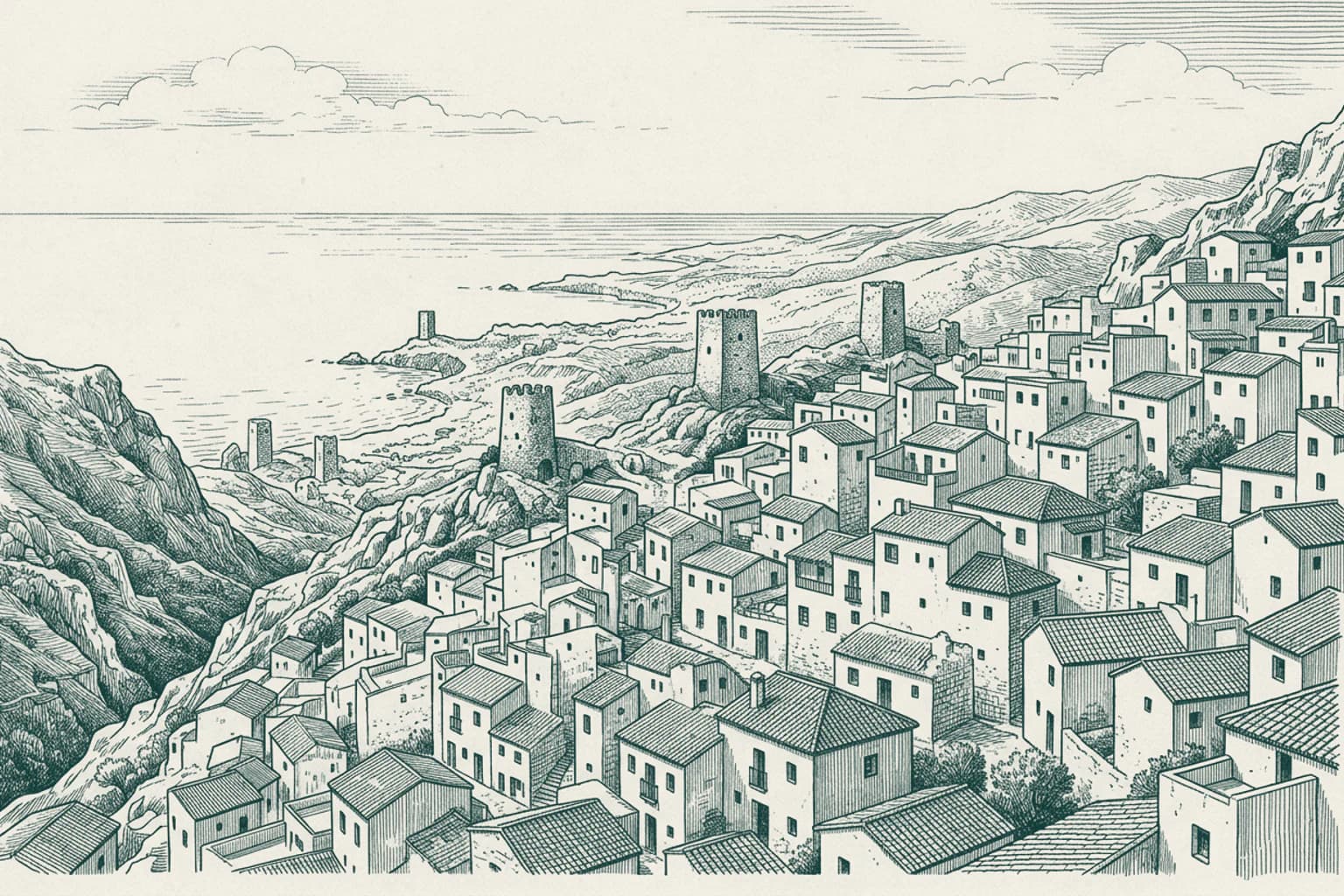
The Transformation of Modern Mijas
But let us return to the thread of our story, picking up from that fragile moment of isolation when Mijas, stripped of its vineyards by the relentless Phylloxera plague, seemed to be drifting away from the modern world. For decades, the village remained a quiet, remote cluster of homes, where life was defined by the harsh reality of drought and the grueling collection of esparto grass. The town was so detached that telephone service did not arrive until 1953, and for many years, the only architecture to speak of consisted of humble shacks scattered across the mountainside. Yet, history has a way of pivoting when the pressure becomes unbearable. As the mid-20th century dawned, the post-war hunger and unemployment that had gripped the region necessitated a radical change. The decision to build an asbestos factory was an attempt to stabilize the local economy, but it was the rising fame of the Costa del Sol that truly altered the destiny of the municipality. Almost overnight, the focus shifted from the struggle for survival to the promise of tourism. The transformation was profound and rapid. The once-sleepy rural hamlet of La Cala, which had been home to only nineteen farming families, began to expand into a coastal resort. Similarly, Las Lagunas emerged from the interior of a former farming community, growing into a suburban and commercial hub that seamlessly integrated with the neighboring town of Fuengirola. The village of Mijas Pueblo, perched 430 meters above the sea, became the administrative and cultural heart of this new, vibrant municipality. The old ways were not forgotten—the white-washed walls that define the village's character remain a testament to its Andalusian identity—but the economic engine had entirely reset. Today, the municipality is a thriving landscape of seven golf courses, including the massive La Cala Resort, and serves as a primary destination for travelers seeking the intersection of history and Mediterranean leisure. The watchtowers that once warned of pirates now watch over a coastline bustling with modern life. The transition from a isolated, agrarian society to a center of international tourism was not merely an accident of geography, but a complete reinvention of the town's purpose. You are now traversing the very roads that connect these disparate nuclei, from the high mountainside village to the sun-drenched coast, and it is exactly there that you are heading now.
- 0618:42
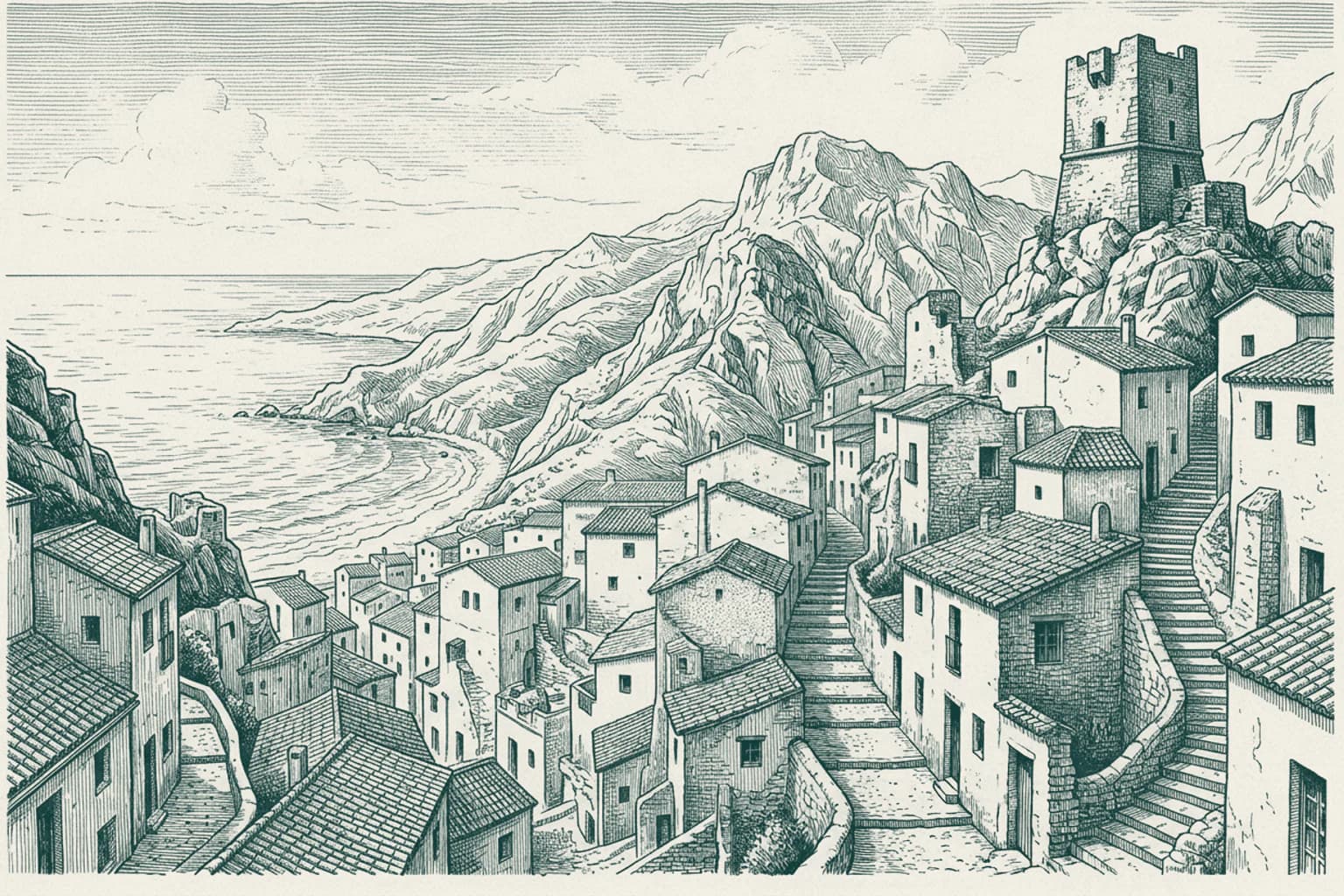
The white village above the sea
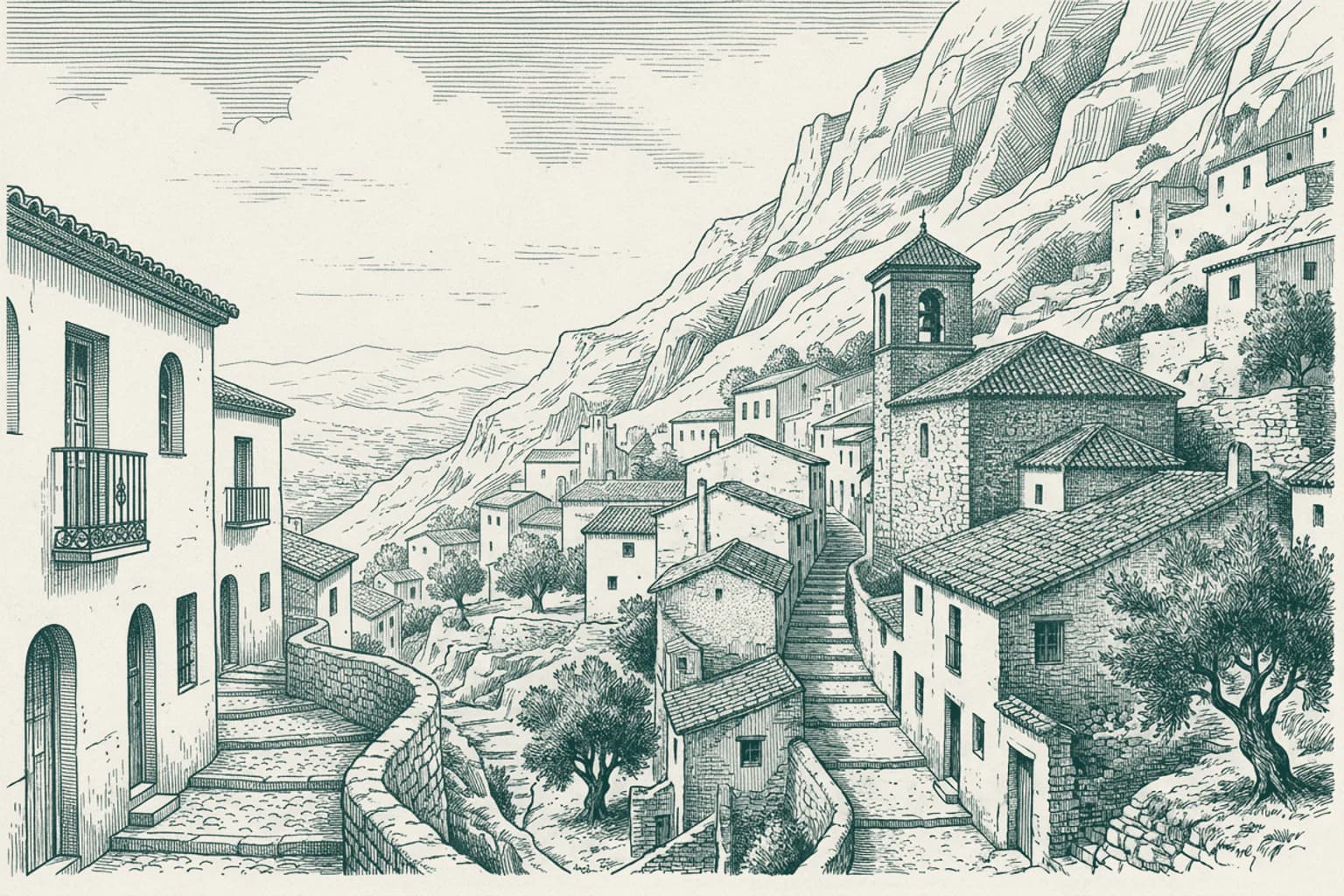
As you pull away from the winding mountain roads of Mijas, look back one last time at those iconic white-washed walls clinging to the hillside. You are leaving behind a place that has been a silent witness to millennia of transformation. Long before the modern tourists arrived, this was Tamisa, a commercial hub for the Romans, and later, a mountain stronghold that shifted hands between Visigoths and Moors. The very name you leave with—Mijas—is a lingering echo of the Moorish abbreviation of that ancient Roman title. It is a town defined by its resilience, having held out against the Catholic Monarchs during the siege of Málaga in 1487, only to earn the title of Very Loyal for its later steadfastness to the crown. As you descend toward the coast, consider the ghosts that walk these slopes. The landscape is marked by the remnants of watchtowers, built not for vanity, but for survival against the persistent pirate raids that terrorized these shores for centuries. You are traveling through a corridor of history, passing the lands where General Torrijos and his men once marched in 1831, a tragic pursuit of liberty that ended in the sands of the coast below. This area has always been a bridge between the isolated mountain life and the bustling sea. Even the educational landscape reflects this bridge, as seen in the presence of St. Anthony's College, the oldest British educational institution in Andalusia, which sits tucked between Mijas and the neighboring town of Fuengirola, acting as a modern anchor in a region that has seen battles like the one in 1810. The economy here has shifted from the ancient vineyards destroyed by the phylloxera plague to the paper mills of the 18th century, and finally to the global resort culture of today. Yet, despite the golf courses and the resort life of Mijas Costa, the soul of the village remains in those white walls and the quiet, rugged determination of its past. The road ahead is open now, rolling toward the horizon where the mountains finally meet the sea. May your journey be smooth and your path ahead be as clear as the Mediterranean sky. Safe travels as you leave the shadows of the mountains behind.
- 07Mijas, Málaga · 18:46
The Beacon of Punta de Calaburras
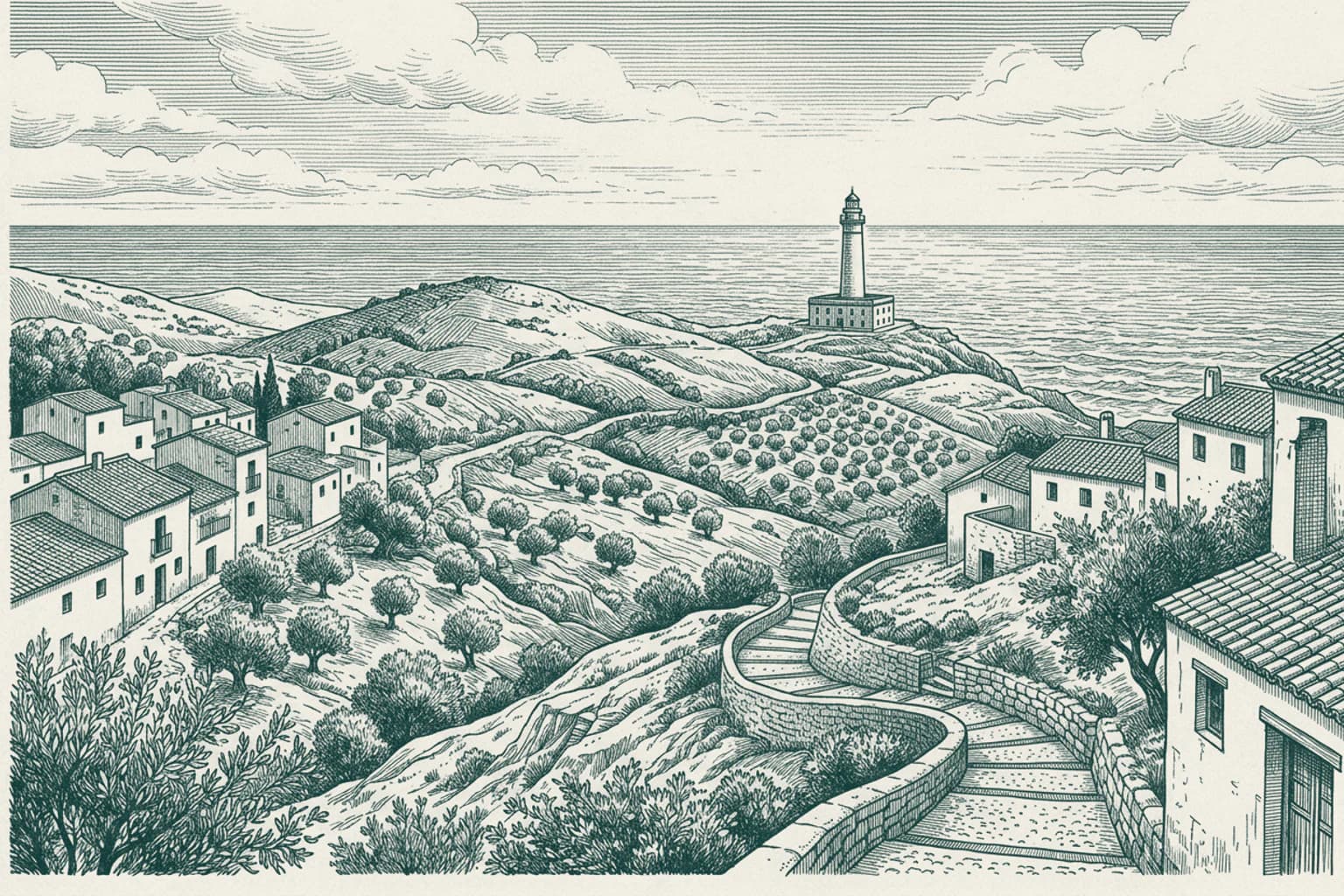
While everyone focuses on the medieval walls up on the hill, there is a much more modern guardian watching over this coastline. If you look toward the rocky point of Punta de Calaburras, you will spot a lighthouse that has been guiding travelers for over a century and a half. This isn't just any signal tower. Back in 1863, it became the very first air and sea lighthouse in all of Spain. It was a massive leap for navigation, helping both ships and early aircraft find their way through the tricky currents near the Strait of Gibraltar. The original masonry tower was quite modest, but the version you see today, rebuilt in 1928, stands nearly 30 meters tall, casting a beam that can be seen for 28 nautical miles. It is fascinating to think how this silent, electric beacon has replaced the need for old-school watchtowers. It has been fully automatic since 1949, quietly flashing every five seconds, completely indifferent to the busy resorts and the hustle of the coast nearby. Do you think we rely too much on these automated systems, or is there something comforting about that steady, predictable flash in the dark?
- 08Mijas, Málaga · 18:48
The Sohail Castle legacy
While you are soaking in the views near Mijas, there is a fascinating layer to the landscape just down the hill that many people overlook. If you look toward the coast, you are peering at the site of the Sohail Castle, which has been standing guard over the Mediterranean long before the modern resorts cropped up. This fortress is a masterclass in strategic positioning. It was not just a pile of stone; it was the eyes and ears of the coast, designed to dominate the horizon and control the flow of ships navigating these tricky waters. Imagine standing on those ramparts centuries ago, watching the sea for any sign of change, knowing that the entire safety of the region depended on what you spotted from that exact hill. It is pretty incredible to think about how much has shifted around that castle while it stayed firmly rooted in place, serving as a silent witness to the ebb and flow of empires. Does it ever make you wonder how many different stories those ancient walls could tell if they could actually speak?
- 09Mijas, Málaga · 18:53
The Hidden History of Mijas
Welcome to Mijas, a place that feels like it’s floating high above the Mediterranean. While many rush to the coast, the real secret of this village lies in the way its people adapted to these steep mountainsides. If you wander through the old town, look for the site known as La Muralla. It’s not just a name; it marks the spot where the original village stood until the mid-17th century. Back then, life was centered right here on the heights before everyone gradually drifted down toward the lower slopes to shape the community we see today. There is also a wonderful local obsession with the very materials that make this place so iconic. If you visit the Ethnographic Museum, you will find stories about the traditional process of making lime. It was this specific craft that provided the white protective coating for every house in the village, giving Mijas its signature look that catches the sunlight so perfectly. It’s a labor-intensive tradition that kept these walls standing for generations. If you have a moment to explore further, keep an eye out for the Ermita de San Sebastian. It dates all the way back to the late 17th century, though it has been lovingly patched up and reformed many times over the centuries. It features a unique vaulted ceiling that is a masterclass in local craftsmanship. Isn't it fascinating how a simple lime wash and a few clever architectural adjustments can define the entire identity of a mountain village? 🌿
- 10Mijas, Málaga · 18:56
Mountains and monuments of Mijas
While you are looking out over this landscape, you are actually standing in the shadow of the mighty Sierra de Mijas. This mountain range is essentially the backbone of the region, separating the inland valleys from our sunny coast. It is geologically fascinating, made mostly of ancient marble and limestone that has been shaped by nature over millions of years, reaching its peak at Pico Mijas. It is quite a contrast to the bustling coast, standing there as a silent, stony giant. Speaking of stone, not far from here lies a truly eccentric piece of architecture called the Castillo de Colomares. It is a massive, whimsical monument dedicated to Christopher Columbus that looks like a castle but was actually built between 1987 and 1994. The creator, Dr. Esteban Martin, had a wild imagination and built it by hand with just two masons. It is packed with architectural styles, but the real kicker is that it holds the world record for the smallest church—it is barely two square meters inside! You would have to be very good friends with whoever is praying next to you. It is funny how this area mixes such grand geological history with these little, quirky human projects, is it not? Have you ever seen a church that tiny before?