History of Khlong Toei District
EN- 01Khlong Toei District, Bangkok · 14:05
History of Khlong Toei District
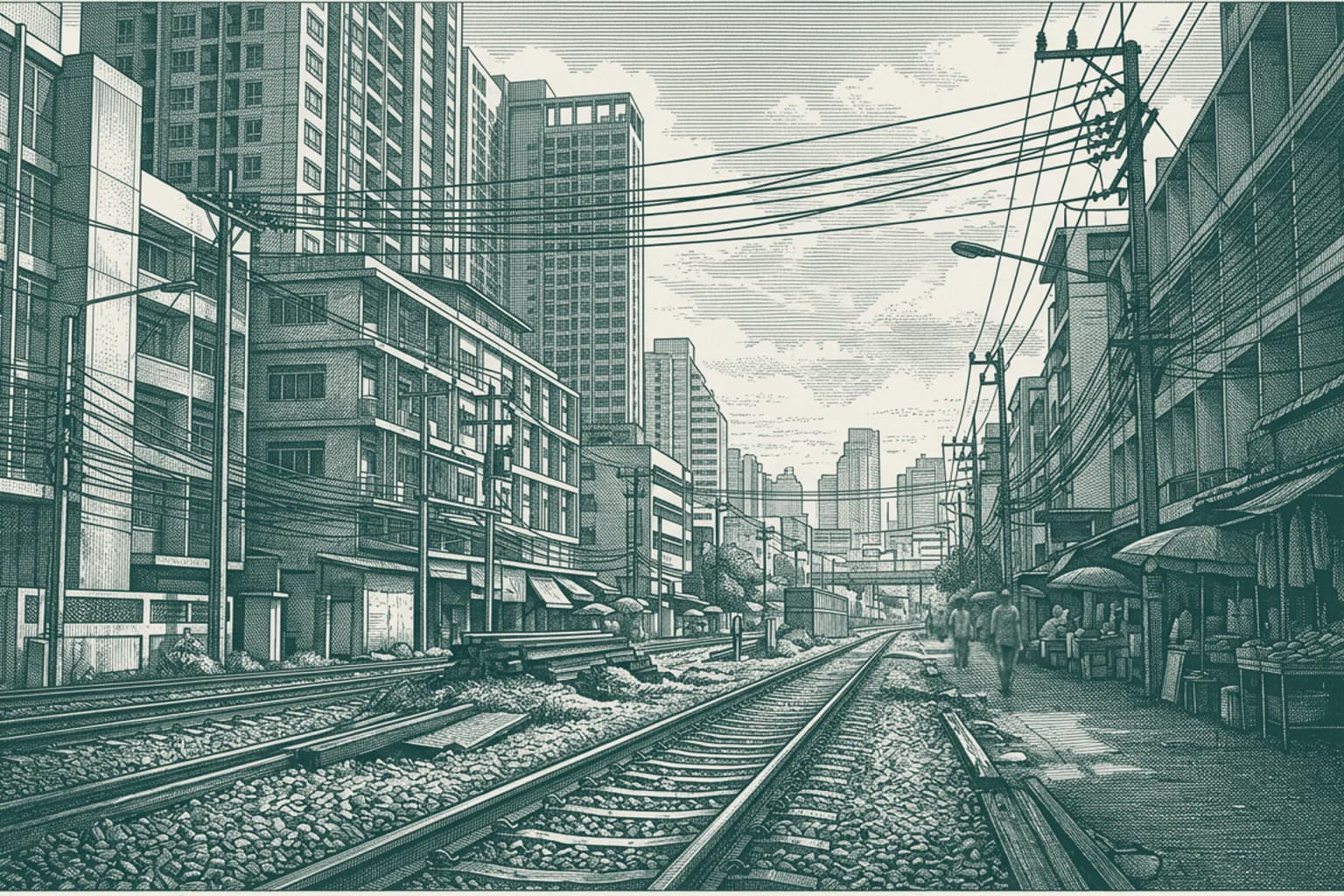
You are currently standing in an area that has undergone quite a transformation over the last century. Before the modern bustle of Sukhumvit Road took over, this strip was historically known as Thanon Trong, a name it has held since 1857. It is fascinating to imagine that where traffic flows today, there was once a different kind of transit entirely. From 1893 until 1960, this exact corridor was defined by the Paknam Railway, which served as a vital link for the city. It is a stark contrast to the neighborhood’s current identity, which is now famous for being a hub of innovation and education. Just nearby, you can find the Bangkok Planetarium, which holds the title of the oldest facility of its kind in all of Southeast Asia. It is impressive to think that since its opening in 1964, that dome has been projecting the night sky for generations of students. The area has certainly traded its old railway tracks for a much more celestial view of the stars. It is a quiet reminder of how much this district has evolved while staying at the heart of Bangkok life.
- 0214:06
The Ghostly Canals of Khlong Toei
As you leave the bustling urban landscape of Khlong Toei, the modern concrete edges of Bangkok begin to soften into a history that feels far older than the towering skytrains. This district, often defined by its proximity to the docks and its intense energy, holds a quiet, haunting secret that pulls at the threads of local folklore. Long before the city became a sprawl of high-speed transit and shopping districts, life here was dictated by the rhythm of water. Between 1837 and 1840, the Khlong Phra Khanong canal was excavated, carving a vein through the rural landscape. It was along these muddy, fertile banks that a legend took root, one that persists in the collective memory of the people to this day. The story of Mae Nak Phra Khanong is woven into the very soil of this area. It tells of a devotion so profound that it defied the boundary between life and death. While the city around you has transformed into a hub of international commerce and modern education, with places like the Bangkok Planetarium opening its doors in 1964 to gaze at the stars, the local consciousness still holds space for the spirit of the canal. The transformation of this region is stark. Where once there were rural communities and naval lands, such as the area near Thong Lo named after the revolutionary naval officer Thonglo Khamhiran, there are now massive complexes and bustling junctions. Even the memory of mid-century entertainment hubs like Washington Square, which served as a home for veterans and expatriates for decades, has been largely overtaken by the relentless pace of urban development. Yet, as you drive away, the dichotomy remains clear. You are leaving a place that was once a target during the aerial campaigns of World War II, a place that saw bombs fall on its docks in January 1942, and yet it has emerged as a center of culture and modern identity. The history of this district is not just in the buildings or the roads that link Rama IV to the sprawling Sukhumvit network. It lives in the persistence of stories that survive the concrete. As the city lights begin to blur in your rearview mirror, you carry with you the resonance of a place that balances its ancient, ghostly myths with the gravity of its twentieth-century scars. May the road ahead be smooth, and may the quiet stories of the places you pass stay with you on your journey.
- 0314:06
История двух городов: Бангкок и Куала-Лумпур
Когда дорога уходит за горизонт, а пейзаж за окном становится монотонным, самое время погрузиться в истории мест, которые кажутся далекими, но хранят память о стремительных переменах. Мы движемся сквозь пространство, оставляя позади шумные районы, такие как Клонг-той в Бангкоке, где история пропитана трудом поколений и следами великих потрясений. Этот район, ставший свидетелем бомбардировок доков во время Второй мировой войны в начале сороковых годов, навсегда сохранил память о тех днях, когда небо над ним застилали клубы дыма. В то же самое время, за тысячи километров к югу, формировался совершенно иной облик столицы Малайзии. Куала-Лумпур, чье название в переводе с малайского означает илистое устье, возник в середине девятнадцатого века как поселение, выросшее вокруг оловянных рудников. Его история, тесно связанная с именами таких фигур, как Яп А Лой и Фрэнк Суэттенхэм, превратила небольшое поселение в политический и экономический центр страны. В то время как Бангкок развивался вокруг своих каналов, таких как Клонг Пхра Кханонг, вырытых еще в тридцатые годы девятнадцатого века, Куала-Лумпур прошел путь от регионального центра Селангора до столицы федерации. Оба города прошли через горнило двадцатого века, став свидетелями колоссальных трансформаций. Если в Бангкоке память о прошлом живет в легендах и архитектуре, таких как старейший планетарий региона, открытый в середине шестидесятых, то Куала-Лумпур в конце девяностых годов прошлого века заявил о себе миру возведением башен Петронас. Эти небоскребы, на долгие годы ставшие самыми высокими в мире, до сих пор остаются символом амбиций и прогресса. Несмотря на то, что эти города разделены географией, они объединены общим стремлением к модерну. Сегодня оба мегаполиса — это узлы глобальных сетей: от масштабных торговых комплексов, как ЭмКуартье в Бангкоке, до развитых транспортных систем, связывающих Куала-Лумпур с международным аэропортом. В этой бесконечной дороге важно помнить, что за каждой точкой на карте скрывается свой уникальный путь, будь то берега илистых рек Малайзии или исторические улицы района Клонг-той. История каждого из них продолжает писаться прямо сейчас, вплетаясь в ткань современного мира.
- 0414:06
История одного грязного слияния
Вы движетесь к точке, чье имя на языке местных жителей звучит как неразрешимая загадка, скрытая в самом ландшафте. Куала-Лумпур. В буквальном переводе это означает грязное слияние, место, где воды рек Гомбак и Кланг встречаются, чтобы навсегда изменить судьбу этой земли. Но задолго до того, как здесь появились небоскребы, это был лишь крошечный поселок, затерянный среди джунглей. В 1857 году малайский вождь Раджа Абдулла принял решение, которое навсегда изменило ход истории. Он нанял китайских рабочих, чтобы те открыли оловянные рудники в районе Ампанг. Эти люди прибыли на лодках, дойдя до самого дальнего места, куда можно было добраться по реке, и основали здесь перевалочный пункт. Ставка была высока: джунгли были беспощадны, малярия косила людей сотнями, а единственными строительными материалами были дерево и пальмовые листья. Поселение росло вокруг старой рыночной площади, превращаясь из горстки лачуг в торговый центр, где процветал обмен провизии на драгоценное олово. Однако успех породил хаос. Власть здесь не была дана свыше — её приходилось отвоевывать в бесконечных стычках между враждующими группировками, которые боролись за контроль над самыми богатыми жилами. Лидеры китайской общины, носившие титул Капитан Китая, пытались удержать порядок, но город был обречен на испытания. В 1872 году, в разгар гражданской войны в Селангоре, Куала-Лумпур был захвачен и сожжен дотла. Казалось, что от него не останется ничего, кроме пепла и воспоминаний о неудачной попытке покорить речные берега. Но это было лишь начало. Город, словно феникс, восставал из грязи, переживая эпидемии холеры, разрушительные пожары и катастрофические наводнения, которые смывали всё, что строилось десятилетиями. Каждое такое бедствие заставляло людей бежать, но каждый раз, когда цены на олово начинали расти, они возвращались, чтобы снова начать всё с нуля. В этих бесконечных циклах разрушения и возрождения ковался характер места, которое сегодня претендует на звание одного из самых динамичных мегаполисов Юго-Восточной Азии. Вы продолжаете свой путь к этой точке, не подозревая, что под слоями бетона и зеркального стекла скрывается память о тех самых первых старателях, чей пот и кровь когда-то наполнили эти берега, и именно туда вы сейчас едете.
- 0514:06
The Transformation of Kuala Lumpur
So, where were we? We left off as the town emerged from the ashes of the Selangor Civil War, a fragile settlement built on the volatile promise of tin. But the end of the 19th century brought a pivot point that would forever alter the city's trajectory. If those early years were defined by the lawless struggle for mines and the constant threat of fire, the arrival of Frank Swettenham and the subsequent administrative consolidation changed everything. The town stopped being merely a collection of mud-caked shacks and began to function as an engine of colonial and economic ambition. By 1880, Kuala Lumpur had been designated the capital of Selangor, a status that demanded permanence in place of the fleeting, wooden structures of the past. The cycle of destruction finally met its match in systemic planning. As the 20th century dawned, the city began to shed its identity as a mere outpost. The transition was not instantaneous, but the shift from a chaotic mining camp to a political hub was relentless. The city became the seat of government, hosting the parliament and the residence of the monarch, transforming the confluence of the Gombak and Klang rivers into the administrative heart of the nation. This era laid the groundwork for the modern metropolis we recognize today, setting the stage for the rapid development that would eventually define the city on a global scale. The skyline, once dominated by palm-thatch roofs and the smoke of timber fires, began its long, vertical climb toward the clouds. The city navigated the complexities of the 20th century, from the scars of the Second World War to the birth of a new nation, eventually cementing its position as the founding capital of the Federation of Malaya and later Malaysia itself. The rapid economic expansion that followed in the 1990s was not a departure from the city's history, but a culmination of its long-standing role as a center for trade and innovation. The infrastructure that connects the Klang Valley today is merely the latest chapter in a story that began with miners walking footpaths toward Ampang. The city grew into its own, hosting Commonwealth Games and world-class sporting events, effectively turning its local industry into a global footprint. The transition from a muddy landing place to a concrete titan was marked by this shift from resource extraction to structural, cultural, and political dominance, and it is precisely into this sprawling, evolved landscape that you are currently driving.
- 0614:06
Kuala Lumpur: From Mud to Metropolis
But we must look at how this city transcended its turbulent origins to become the modern titan you are approaching. After the fires and floods of the late nineteenth century, Kuala Lumpur did not simply recover; it redefined itself. The city transitioned from being a mere mining outpost to the political heart of a nation, serving as the capital of the Federation of Malaya and later Malaysia. This shift was not just administrative but physical, as the humble wooden structures that once defined the landscape were replaced by steel and ambition. By the end of the twentieth century, the city underwent a dramatic metamorphosis, shedding its colonial-era skin to embrace a future of global connectivity. The skyline became a testament to this evolution, famously punctuated by the Petronas Towers. Standing at over four hundred and fifty meters, these iconic twin structures held the title of the tallest buildings in the world for several years, symbolizing the rapid economic and structural development that defined the region. Beyond the steel, the city blossomed into a hub of international influence, hosting major events like the Commonwealth Games, Formula One races, and the FIFA World Youth Championships. This era of acceleration turned Kuala Lumpur into a magnet for millions, ranking it among the most visited cities on the planet. Today, as you draw closer, you are entering a metropolis of over two million residents, where the legacy of the early tin miners is preserved within a high-tech, integrated transit system that links the bustling city center to the rest of the Klang Valley. The city has matured into a global technology innovation hub and a recognized center for literature, having been named a World Book Capital by UNESCO. It remains the official residence of the monarch, home to the parliament, and a vibrant confluence of cultures. From the muddy landing place that Raja Abdullah once envisioned to a top-tier destination in Southeast Asia, the city has maintained its status as a core political and financial engine. It is a place where the past is not forgotten but integrated into a sophisticated, modern infrastructure that welcomes travelers from every corner of the globe. The transformation is complete, the city stands as a testament to resilience and rapid growth, and it is exactly where you are headed now.