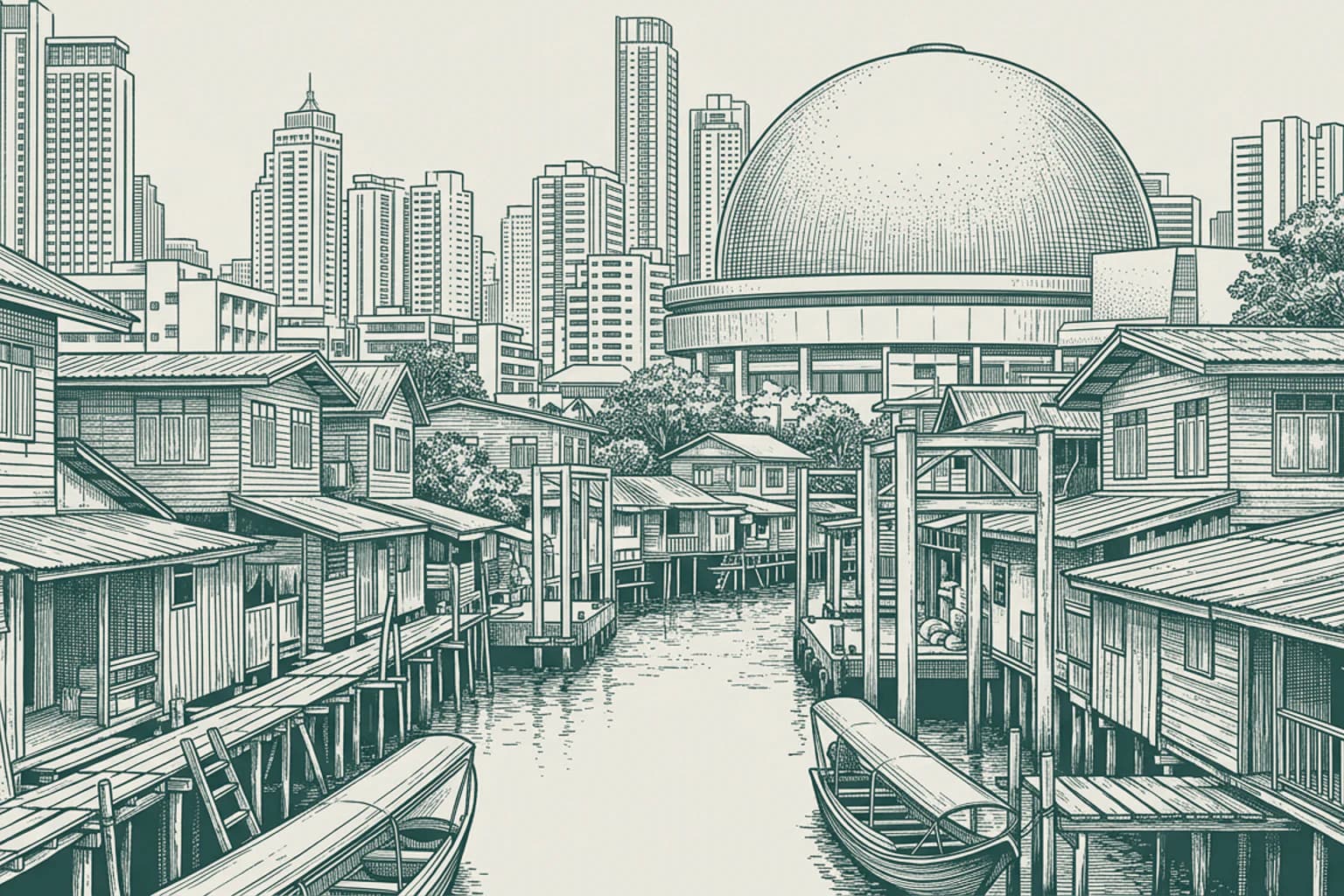
Stars and Science in Bangkok
EN- 01Khlong Toei District, Bangkok · 03:36
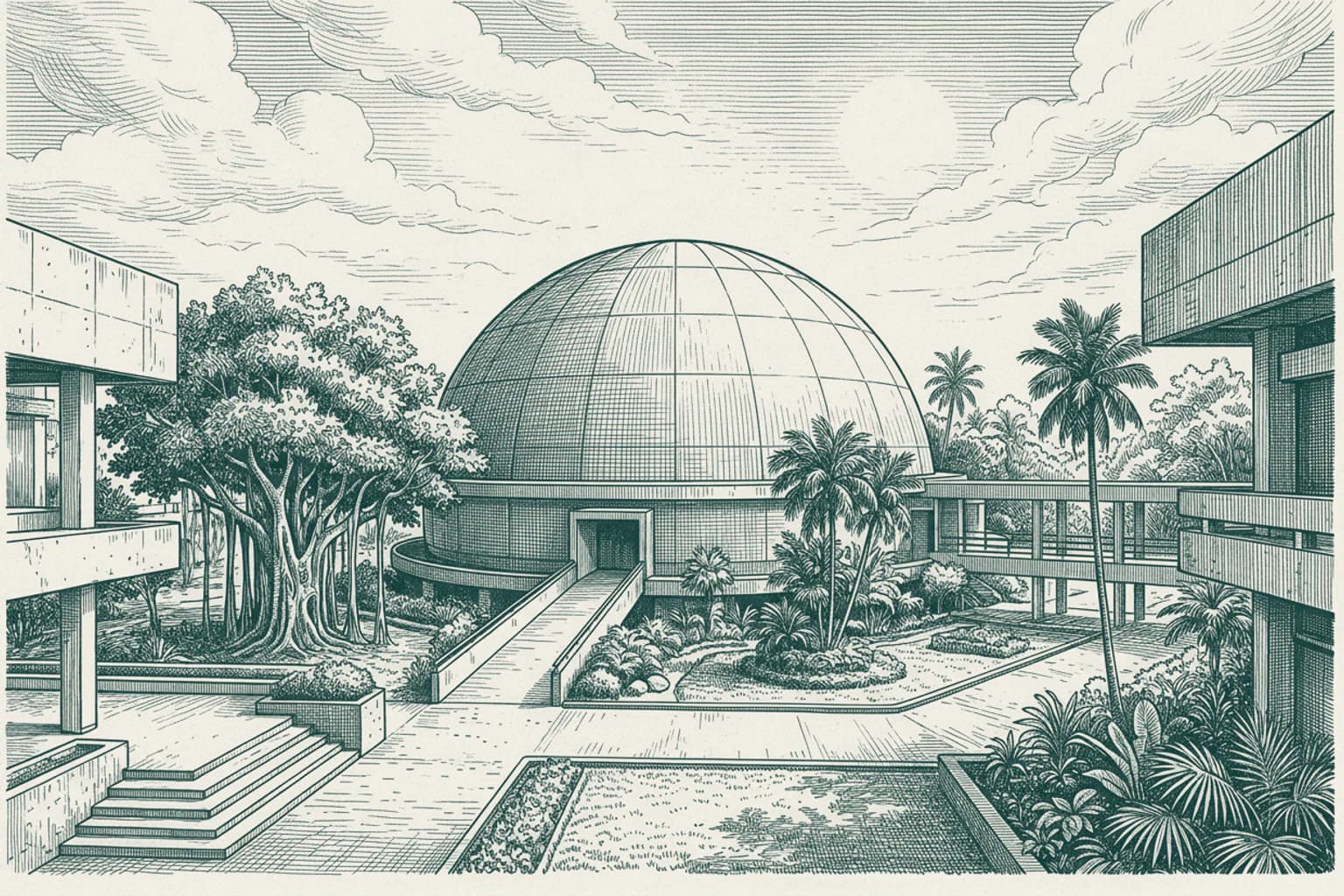
Khlong Toei District, Bangkok Stars and Science in Bangkok
It is a pleasure to find you wandering along this familiar stretch of Sukhumvit Road once again. While the city around you pulses with its modern rhythm, there is a quiet, celestial corner here that has been gazing at the stars for decades. Tucked away within the Science Centre for Education stands the Bangkok Planetarium, which holds the distinction of being the oldest facility of its kind not just in Thailand, but in all of Southeast Asia. When the doors first opened in 1964, the project was quite a bold leap into the future of public education, funded by a budget of twelve million baht. Inside the dome, which rises thirteen meters high, sits the original Mark IV Zeiss projector. It was a marvel of its time, designed to map the night sky for thousands of curious visitors. It is fascinating to think that while the neighborhood outside has transformed into a hub of trendy bars and bustling transport links, this quiet dome has remained a steady anchor for astronomy enthusiasts for over sixty years. It is a humble, enduring piece of history hidden in plain sight.
- 0203:41
The Ghost and the Canal
As you pull away from the busy streets of the Khlong Toei District, you leave behind a landscape that holds the weight of centuries beneath its modern concrete skin. This area is defined by the memory of the Khlong Phra Khanong, a canal excavated between 1837 and 1840. Long before the tall buildings and the hum of traffic became the rhythm of the city, rural communities clustered along these banks, living in harmony with the water. It was this quiet, secluded life that gave birth to one of the most enduring legends in Thai folklore, the ghost of Mae Nak Phra Khanong. The story of her undying devotion and the supernatural shadow she cast over the canal banks remains etched into the cultural identity of this neighborhood. The transition from those rural days to the present was gradual but profound. Nearby, the history of the area continued to evolve through the mid-twentieth century. In 1964, the Bangkok Planetarium opened its doors on Sukhumvit Road, marking a shift toward modernization and education. It was the first planetarium in Southeast Asia, bringing the mysteries of the stars to the public under a massive dome. Not far from these astronomical pursuits, the landscape bore the scars of a much harsher reality. During the Second World War, the Bangkok Docks were targeted by aerial raids, suffering four separate bombings between January 7 and January 27, 1942. These events remind us that the ground beneath your wheels has witnessed everything from ancient ghost stories to the turmoil of global conflict. As you continue your journey, look toward the horizon where the past and the present meet. The area evolved from naval occupation and quasi-rural stretches to become a central hub of urban life, with roads like Thong Lo, named after a naval officer and member of the 1932 revolutionary group, carving paths through what was once suburban territory. Every kilometer you travel away from Khlong Toei carries you further from these layered histories, from the canal-side legends of a devoted spirit to the rapid development of the modern city. The road ahead is open and clear, and the city behind you lingers only as a collection of stories in the rearview mirror. May your travels be smooth and your path remain steady as you head toward your next destination.
- 0303:41
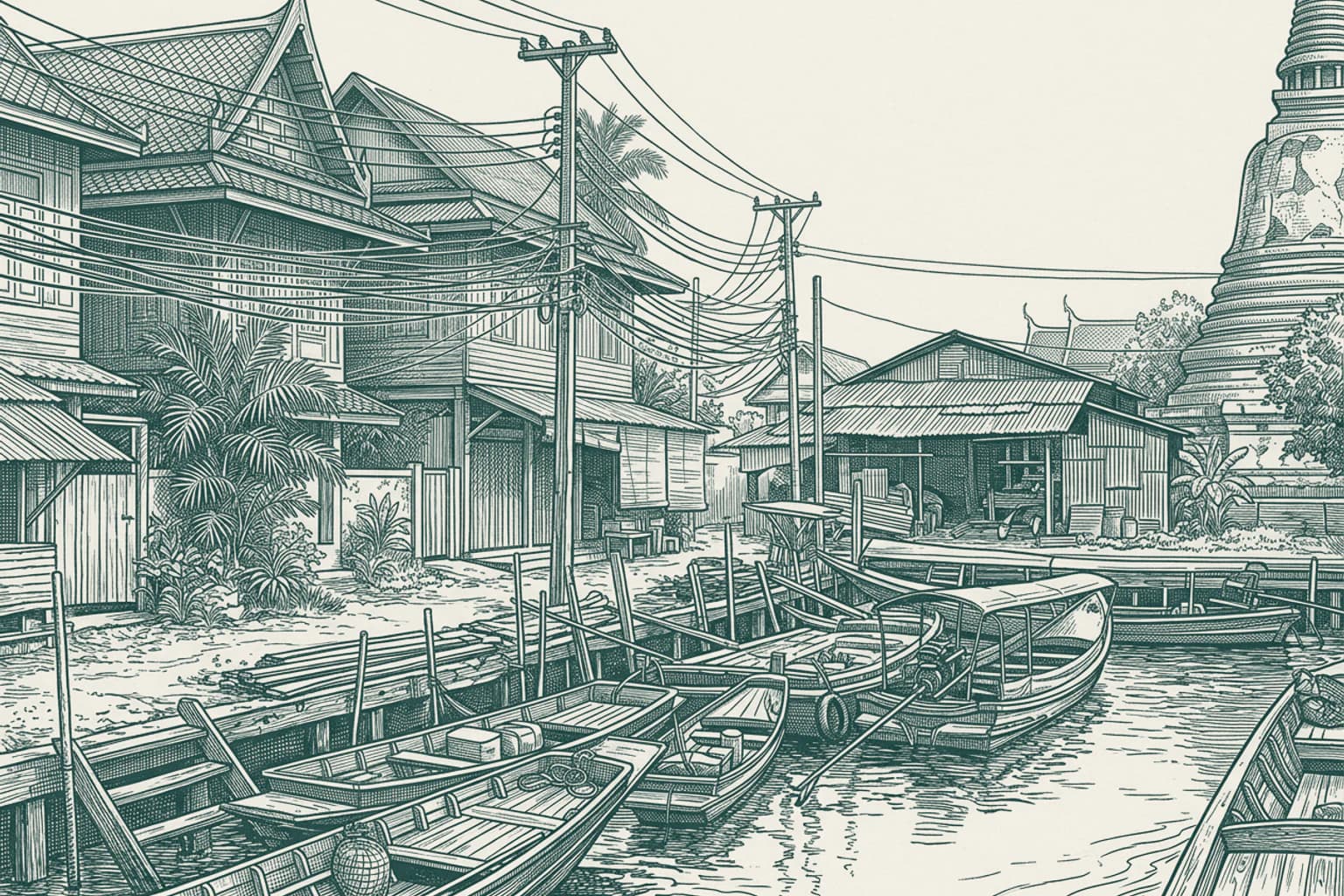
История двух районов Бангкока
Когда вы движетесь по шумным артериям Бангкока, легко вообразить, что город всегда был единым монолитом стекла и бетона. Однако история этих мест напоминает скорее лоскутное одеяло, где каждый район хранит свои собственные воспоминания, зачастую развиваясь параллельно, но не пересекаясь в ключевых событиях прошлого. Взять, к примеру, район Патум Ван и территорию Кхлонг Той. Пока вы скользите по дороге, стоит вспомнить, как начиналось формирование этих земель. В Патум Ван всё началось с королевских указов и ландшафтного дизайна. Когда в девятнадцатом веке город стал тесен, правители начали осваивать восточные окраины, превращая рисовые поля в королевские резиденции. Король Монгкут, известный как Рама IV, приказал разбить здесь пруды с лотосами, подарив району его поэтичное название, означающее лес лотосов. Здесь строились дворцы, храмы и первые дороги, связывающие монаршие виллы с центром. Позже эти земли стали интеллектуальным сердцем страны, когда на месте бывших королевских владений вырос университет Чулалонгкорн, а окрестности превратились в современный деловой и торговый центр. Совсем иная летопись писалась в районе Кхлонг Той. Если Патум Ван был местом королевского досуга и образовательных институций, то Кхлонг Той исторически развивался вокруг индустриальной мощи города. В середине двадцатого века этот район стал свидетелем драматических событий, связанных с глобальными конфликтами. В период Второй мировой войны доки Кхлонг Той стали стратегической целью, подвергшись многократным бомбардировкам. Эти две истории — история изысканных садов Патум Ван и история индустриальных доков Кхлонг Той — существуют вдоль одного пути, но представляют собой разные грани становления столицы. Между ними нет общих войн, торговых путей или единого административного прошлого, которое связывало бы их судьбы в одну линию. Патум Ван оставался тихой гаванью для принцев и студентов, в то время как Кхлонг Той принимал на себя удары истории, связанные с логистикой и портовой деятельностью. Сегодня, проезжая мимо них, вы видите лишь современный мегаполис, где торговые центры Сиама соседствуют с портовыми зонами, но за этим фасадом скрываются два разных мира, каждый из которых прошел свой собственный путь к нынешнему облику Бангкока.
- 0403:41
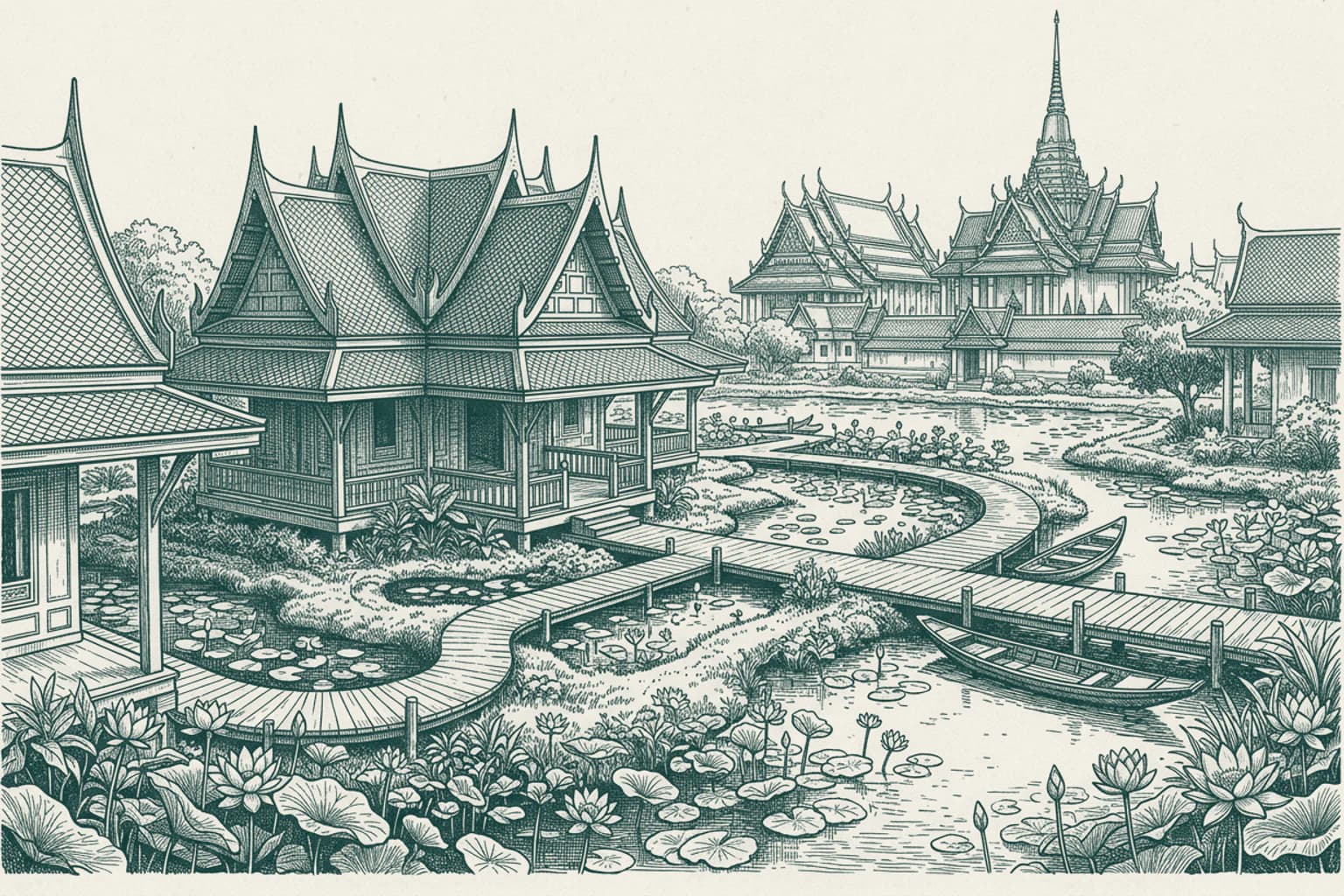
The Lotus Forest of Bangkok
When King Rama I established Bangkok as his capital in 1782, the area that would one day become the bustling heart of the city was nothing more than a quiet, rural fringe. Beyond the old city boundary of the Khlong Phadung Krung Kasem canal, the landscape was dominated by expansive rice fields, sparsely populated and far removed from the royal court. Among the few residents were the settlers of Ban Khrua, a Muslim community that established itself along the banks of the canals. For decades, this land remained a peripheral expanse, a stretch of green paddies where Lao war captives were settled following the razing of Vientiane in 1827. The quietude of this eastern edge was absolute, defined only by the slow movement of water through the irrigation channels that carved through the dirt. Everything changed in the mid-nineteenth century under the reign of King Mongkut. The monarch looked upon these royal fields and saw not just agricultural utility, but a place for royal repose. Sometime before 1855, he ordered parts of the landscape to be transformed. Ponds and winding waterways were excavated, and in a deliberate act of aesthetic creation, they were planted with decorative lotuses. The area was christened Pathum Wan, meaning lotus forest, a name derived from the Pali words for the flower and the woodland. A royal villa was erected amidst this newfound serenity, accompanied by the construction of Wat Pathumwanaram, a temple that stood as a spiritual anchor for the site. The King began to make annual visits, traveling first by boat along the canals, and later via a newly constructed road that linked this rural retreat to the city proper. This was the catalyst that would forever alter the trajectory of the district. The royal presence acted as a magnet, drawing the elite of the kingdom to the area. Where once only paddy fields stretched toward the horizon, palaces began to emerge as the nineteenth century drew to a close. King Chulalongkorn commissioned grand residences for his sons, including the sprawling grounds of Windsor Palace. The quiet lotus gardens were being replaced by the architectural ambitions of a modernizing monarchy, setting the stage for a transformation that would eventually turn this rural sanctuary into the very center of the nation's urban life. The stakes were set, as the transformation of the landscape turned a royal pleasure ground into the foundation of a modern metropolis, and it is precisely there that you are heading now.
- 0503:41
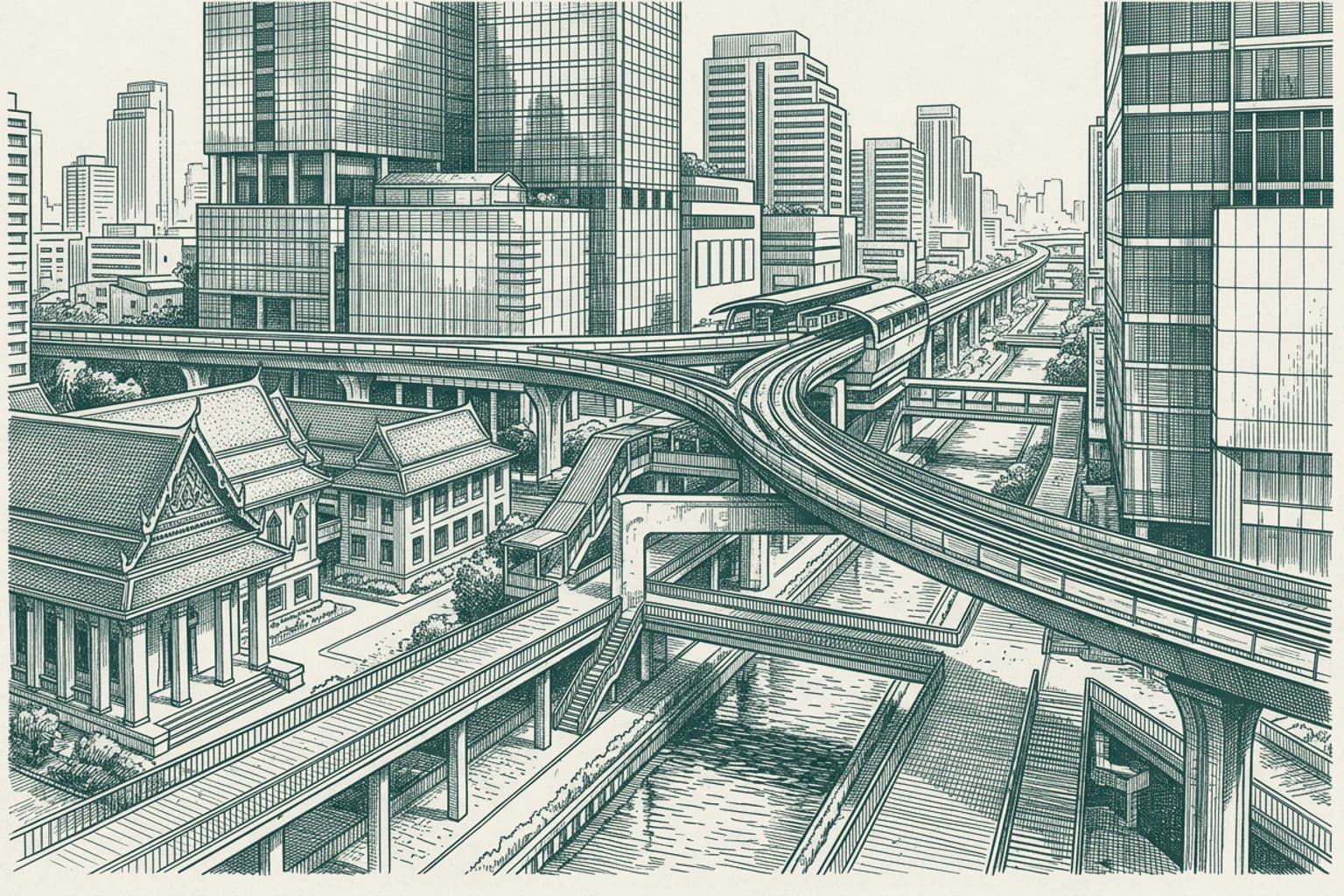
Трансформация района Патхум Ван
Итак, на чем мы остановились: королевские лотосовые поля и безмятежные виллы начали отступать перед напором новой эпохи. В начале двадцатого века этот район пережил решительный поворот, превратившись из места уединения монархов в колыбель государственных институтов. Ключевой фигурой в этой метаморфозе стал король Вачиравуд, который в 1917 году основал университет Чулалонгкорн, разместив его на землях, где некогда возвышался дворец Виндзор. Это решение окончательно сменило вектор развития территории: от закрытых королевских владений к открытому образовательному и административному пространству. В 1916 году, всего за год до основания университета, западнее университетских земель открылся железнодорожный вокзал Бангкока, ставший главной транспортной артерией страны. Инфраструктура начала стремительно менять облик ландшафта: прокладывались новые дороги и железные пути, пронзая то, что еще недавно было тихими пригородами. К 1915 году административная реформа официально закрепила статус этих земель как ампхое Патхум Ван, определив его границы четкими линиями каналов и железных дорог. Однако истинный перелом произошел во второй половине столетия, когда район перестал быть просто академическим или административным центром. Начиная с 1970-х годов, вдоль дорог Рама I и Пхленчит начала формироваться совершенно иная среда. Открытие отеля Эраван на перекрестке Ратчапрасонг в 1956 году и появление универмага Тай Даймару в 1964 году, который впервые принес в город эскалаторы и кондиционированный воздух, обозначили приход эры массового потребления. Университет Чулалонгкорн, владеющий огромными участками земли, также включился в этот процесс, развив торговую зону Сиам Сквер. Сиам и Ратчапрасонг стремительно вытесняли старые торговые кварталы, становясь новыми точками притяжения молодежной культуры и городского ритейла. Это превращение достигло своего пика в 1999 году с запуском надземного метро, центральный узел которого в станции Сиам окончательно цементировал статус района как современного сердца столицы. Городская ткань уплотнялась, превращаясь в лабиринт из торговых центров, эстакад и высотных жилых башен, где история королевских лотосов была почти полностью скрыта под стеклом и бетоном, и именно туда вы сейчас едете.
- 0603:41
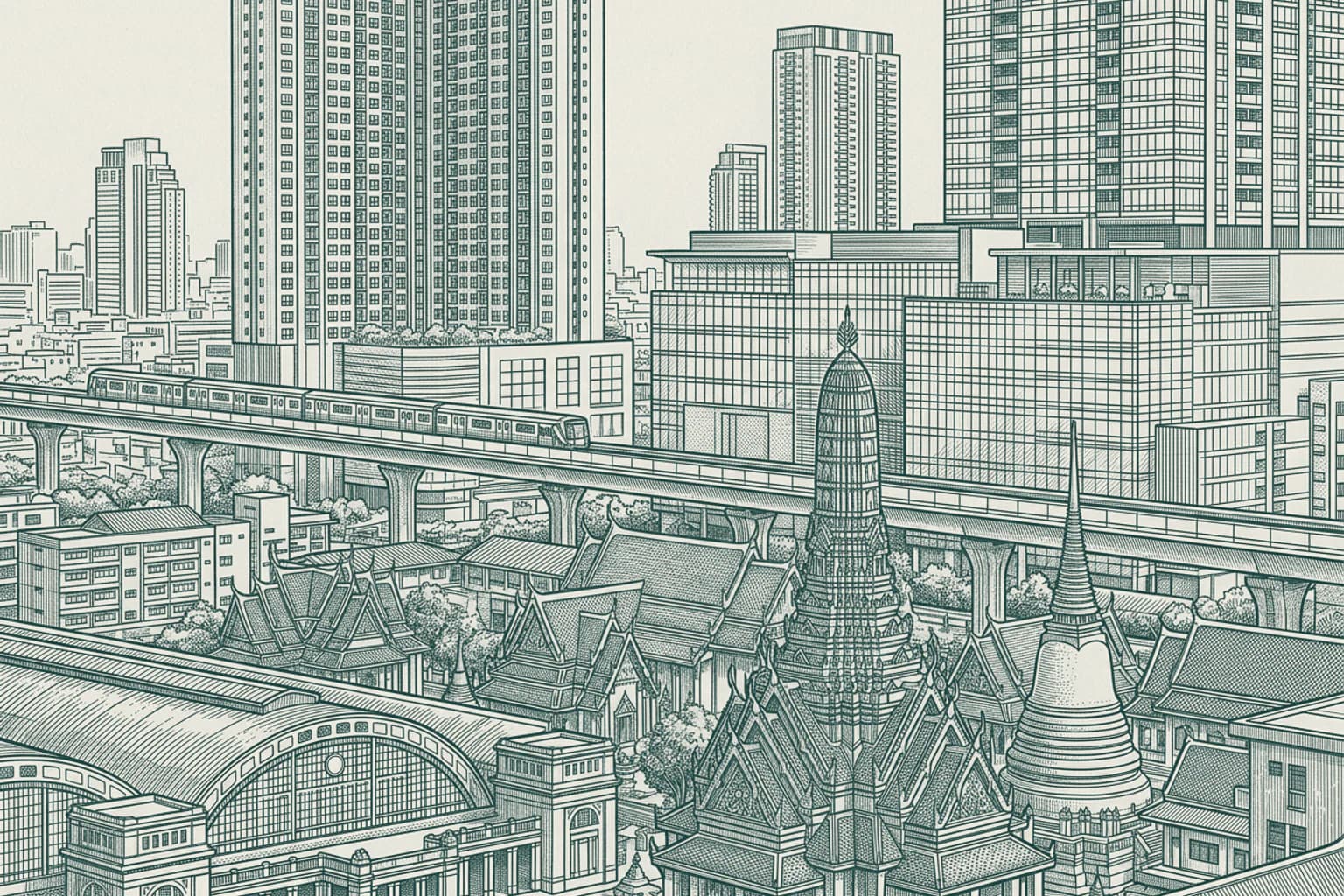
Наследие лотосовых полей Патхум Ван
Но вернемся к нашей истории, где королевские лотосовые пруды уступили место грохоту прогресса. Когда в 1915 году район Патхум Ван был официально закреплен как административная единица, он превратился из тихой загородной резиденции в полигон для амбициозных государственных проектов. На месте бывших королевских полей, где когда-то отдыхали монархи, вырос университет Чулалонгкорн, ставший интеллектуальным фундаментом страны. В 1916 году здесь открылся железнодорожный вокзал Хуа Лампхонг, связавший сердце Бангкока с остальным королевством, а вокруг него постепенно прорастала сеть дорог, навсегда изменившая ландшафт. К середине двадцатого века этот район пережил еще одну метаморфозу. В 1956 году на перекрестке Ратчапрасонг открылся отель Эраван, а за ним последовала череда торговых центров, таких как Сиам Сентер, которые превратили тихие улочки в шумный центр розничной торговли и молодежной культуры. Этот процесс достиг своего пика в 1999 году с запуском надземного метро, центральный узел которого на станции Сиам окончательно цементировал статус района как современного сердца столицы. Городская ткань уплотнялась, превращаясь в лабиринт из торговых центров, эстакад и высотных жилых башен. Однако этот стремительный рост не был лишен конфликтов. В 2010 году район стал местом массовых политических протестов, завершившихся жестким военным противостоянием, оставившим глубокий след в памяти горожан. В наши дни наследие прошлого продолжает сталкиваться с требованиями современности, что наглядно продемонстрировал затянувшийся юридический спор вокруг высотного здания в переулке Руамруди, построенного без должных разрешений в 2005 году и окончательно приговоренного к сносу решением Верховного административного суда в 2025 году. Сегодня Патхум Ван — это сложный конгломерат, где исторические храмы, такие как Ват Патхум Ванарам, соседствуют с гигантскими моллами, а университетские кампусы окружены плотной жилой застройкой. Под слоями асфальта и бетона все еще скрывается память о тех самых лотосовых прудах короля Монгкута, которые когда-то дали имя этому месту, и именно туда вы сейчас едете.
- 07Khlong Toei District, Bangkok · 03:53
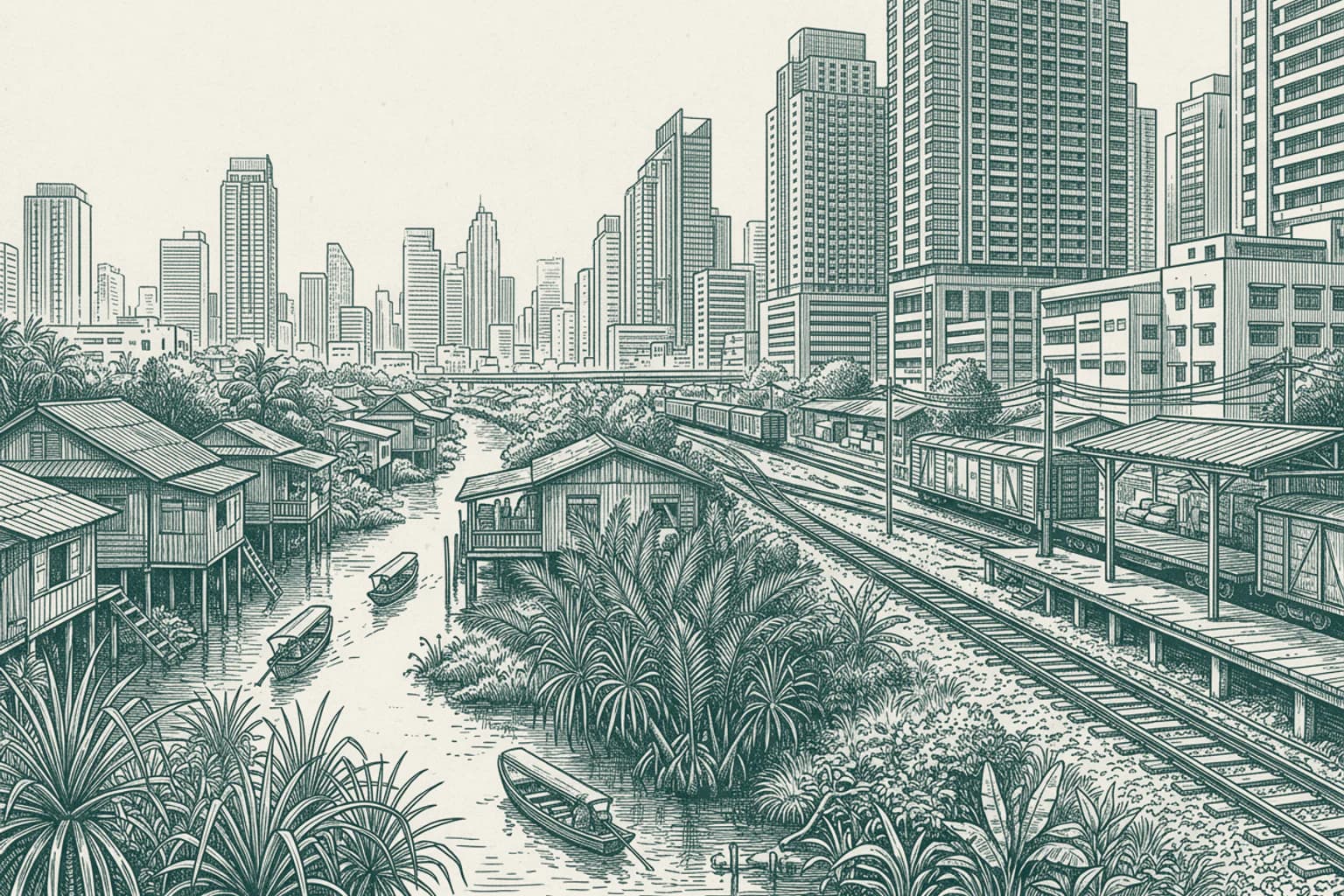
Khlong Toei District, Bangkok The Evolution of Khlong Toei
Before the towering glass structures and the hum of the city took over, this area of Khlong Toei was defined by a completely different landscape. Long before the modern retail giants arrived in the nineties and twenty-tens, this district served as a vital gateway for the city, deeply connected to the movement of goods and people across the water. The very name of the district itself reflects this history, as it translates to the Canal of the Pandanus plant, hinting at the lush, swampy vegetation that once dominated these lowlands. It is fascinating to consider how the rapid transformation of the skyline has completely rewritten the geography of the area. While you are surrounded by modern urban architecture today, the ground beneath you was once part of a vast network of waterways that functioned as the primary lifeblood for local trade long before the first train tracks were laid. The transition from a quiet, plant-rich canal zone to a dense commercial hub happened in the blink of an eye in terms of city history. It is a quiet reminder that even the most bustling concrete corners of Bangkok have roots that reach back to a much greener, quieter past.